
English 
Landline:
+86-571-8233-3525
Telephone:
Telephone:
+86-150-6710-5089
+86-138-6743-1140
Address:
Building 41 workshop, No.17, Xueyuan road, Jiyang street, Zhuji city, Zhejiang Province, China


Views: 0 Author: Site Editor Publish Time: 2026-08-08 Origin: Site


Improper eyeglass cleaning carries a hidden, cumulative cost. Every time you wipe your lenses with a shirt tail or a coarse napkin, you risk creating irreversible micro-scratches. These microscopic abrasions degrade expensive anti-reflective (AR) coatings over time. Consumers constantly face conflicting advice regarding optical care. Optical shops often recommend mild dish soap and water. Online forums aggressively debate the safety of alcohol-based solutions. Meanwhile, the free microfiber cloth included with new glasses presents an inherent failure point. It rapidly accumulates abrasive dirt, facial oils, and silica dust. Reusing a dirty cloth simply grinds debris deeper into the lens surface. We will help you select the optimal cleaning solutions based on substrate material, chemical formulation, and specific coating compatibilities. You will learn exactly how to protect your optical investments and maintain pristine visual clarity.
Coating Compatibility is Paramount: Not all wipes are safe for specialized lenses; while some opticians claim alcohol is strictly off-limits, the reality depends on isopropyl alcohol concentrations and the specific anti-reflective or transition coatings.
Material Science Matters: Utilizing soft touch lens wipes made from synthetic micro-tissues prevents the micro-abrasions typically caused by wood-pulp-based alternatives (like facial tissues or paper towels).
Moisture Calibration: Quick-dry lens wipes are essential for a streak-free finish, but they require immediate application and proper storage to prevent premature evaporation.
Cross-Functional Safety: High-grade camera lens cleaning wipes often serve as the safest, most rigorously tested alternative for premium, high-index eyeglass lenses.
The chemical formulation of a cleaning wipe determines its ability to dissolve facial oils, cosmetics, and environmental grime. Most commercial wipes rely on a blend of water, isopropyl alcohol (IPA), and mild surfactants. Isopropyl alcohol acts as a rapid solvent. It cuts through sebum and skin oils efficiently. Surfactants function like microscopic crowbars. They break the surface tension of water and lift particulate matter away from the lens surface.
A significant debate exists in optician forums regarding alcohol safety. Many professionals state that alcohol is entirely off-limits for prescription eyewear. This blanket statement stems from older, fragile anti-reflective coatings that degraded under harsh solvents. Modern high-index lenses and current AR coatings possess higher chemical resistance. The safety threshold depends entirely on the IPA concentration. Solutions containing less than 30 percent isopropyl alcohol generally remain safe for modern polycarbonate and Trivex lenses. However, prolonged exposure to high-concentration alcohol can strip the oleophobic top layer of premium lenses. Surfactant-only formulas offer a safer alternative for highly sensitive coatings, though they require more physical wiping to remove heavy grease.
Solvent Type | Primary Mechanism | Safe For | Risk Factor |
|---|---|---|---|
Isopropyl Alcohol (Low Concentration) | Rapidly dissolves sebum and evaporates quickly | Standard Polycarbonate, Uncoated Glass | May degrade older AR coatings over time |
Surfactant-Based (Alcohol-Free) | Lifts oils by breaking surface tension | Premium AR Coatings, High-Index Lenses | Requires more physical wiping, slower drying |
Ammonia-Based (Glass Cleaners) | Aggressive chemical stripping | Household Windows Only | Will instantly destroy optical lens coatings |
The physical material of the wipe is just as critical as the liquid formula. Consumers frequently make the mistake of using facial tissues, paper towels, or toilet paper to clean their glasses. These products consist of wood pulp fibers. Wood pulp inherently contains microscopic silica particles left over from the manufacturing process. Wiping a polymer lens with wood pulp is equivalent to using ultra-fine sandpaper. Over time, this practice creates a network of fine scratches that cause light scattering and severe glare during night driving.
Modern optical care relies on advanced material science. High-quality soft touch lens wipes utilize synthetic micro-tissues. These non-woven materials feature a specific porous structure engineered in a laboratory environment. When applied to a lens, the synthetic fibers create microscopic pockets. These pockets trap and lift dust particles away from the surface. This mechanical action prevents the debris from dragging across the delicate lens coating. The softness of the substrate ensures that the mechanical friction required to remove dried water spots does not compromise the underlying optical polymer.
Achieving a streak-free finish requires precise moisture calibration. A wipe that is too wet will leave liquid droplets behind. As these droplets evaporate, they deposit dissolved solids and surfactants onto the lens, causing visible streaks. Conversely, a wipe that is too dry forces the user to apply excessive physical pressure. High physical pressure increases the risk of friction-induced scratching on the lens surface.
The ideal moisture balance dissolves grease instantly without leaving residual liquid. This is where evaporation timing becomes a critical quality indicator. Premium quick-dry lens wipes are engineered with specific solvent-to-water ratios. The solvent cuts the oil, and the liquid evaporates within seconds of application. This rapid phase change prevents the dissolved contaminants from settling back onto the lens. Users must apply these wipes immediately after opening the sealed packet to harness this precise evaporation chemistry.
Field testing the evaporation rate of a wipe involves a specific sequence of actions:
Open the sealed foil packet and immediately unfold the synthetic substrate.
Wipe a clean glass surface in a single, continuous motion from left to right.
Count the seconds until the liquid film completely dissipates from the glass.
Inspect the glass under a direct, harsh light source to check for residual chemical streaks.
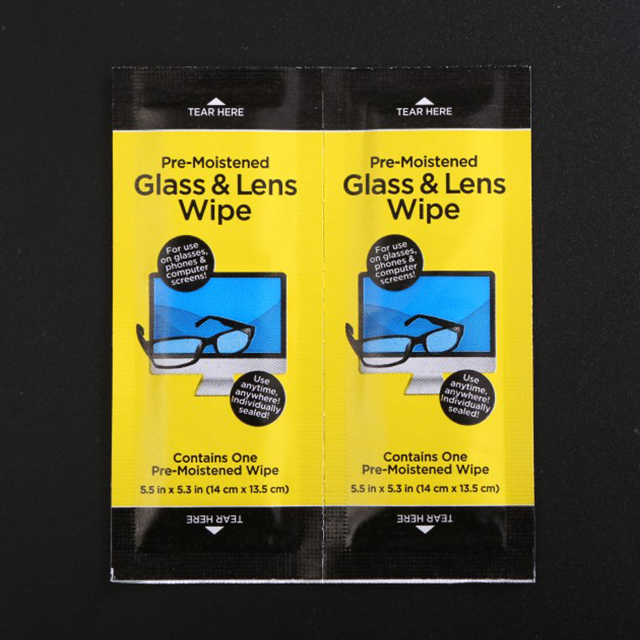
Daily eyeglass maintenance requires a reliable, cost-effective solution that handles standard environmental contaminants. Office workers and daily commuters constantly deal with eyelash oils, fingerprint smudges, and fine HVAC dust settling on their frames. Industry standards in this category offer a balanced formulation suitable for standard CR-39 plastic and basic polycarbonate lenses. They effectively remove daily grime without requiring excessive scrubbing.
When evaluating daily wipes, consistency remains the primary metric. Packaging reliability ensures the wipe retains its moisture until the exact moment of use. Foil-lined individual packets prevent premature drying during transit. Cost-per-wipe also dictates the practicality for daily users. Buying in bulk reduces the unit cost significantly, making daily optical hygiene affordable. The best daily wipes deliver a consistent streak-free finish across varying indoor and outdoor environments, establishing them as a staple for standard optical care.
Premium lenses often feature complex, multi-layered treatments applied through vacuum deposition. These include anti-reflective stacks, blue-light blocking filters, and hydrophobic topcoats. These microscopic metal-oxide layers are highly sensitive to aggressive chemicals. For these specialized lenses, alcohol-free or ultra-low-alcohol formulations are mandatory to prevent chemical stripping.
Wipes designed specifically for AR coatings rely heavily on advanced surfactants rather than rapid-evaporating solvents. This formulation choice introduces a specific trade-off in daily use. Alcohol-free wipes generally require slightly longer drying times. Users may need to perform an extra pass to ensure all liquid dissipates from the lens edges. However, this minor inconvenience extends the lifespan of the lens coating significantly. Protecting a high-end AR treatment from chemical degradation preserves the optical clarity and reduces long-term replacement costs for expensive prescription eyewear.
Active environments subject eyewear to extreme conditions. Sports goggles and safety glasses routinely encounter heavy sweat, sunscreen, salt residue, and industrial grime. Furthermore, these frames typically utilize thicker, impact-resistant polycarbonate lenses. While highly durable against physical impact, uncoated polycarbonate scratches easily when exposed to abrasive field conditions.
Wipes formulated for sports and safety applications feature higher concentrations of heavy-duty surfactants. They must break down stubborn, water-resistant sunscreen oils and dried sweat salts that standard wipes leave behind. Compatibility with wrap-around frames is also a major factor. The wipe must be large enough to navigate curved lens geometries without the user's fingers smudging the edges. Additionally, these wipes must remain safe for specialized anti-scratch hard coats commonly applied to industrial safety eyewear used in construction and manufacturing.
Many users seek a single cleaning solution for their glasses, smartphone screens, and camera equipment. In these scenarios, adopting camera lens cleaning wipes for daily eyewear provides an exceptional safety margin. Professional photography equipment features highly complex, multi-coated optical glass. Wipes engineered for DSLR lenses undergo rigorous testing to ensure they do not strip delicate optical coatings or leave microscopic lint behind.
If a wipe is certified safe for a two-thousand-dollar camera lens, it offers superior protection for high-index prescription glasses. These multi-device wipes typically utilize highly refined, low-residue solvents. They leave zero lint and evaporate flawlessly under various humidity conditions. This makes them equally effective for cleaning sensitive laptop displays and tablet screens without degrading the oleophobic touch-screen coatings that prevent fingerprint buildup.
Temperature transitions and face masks frequently cause lenses to fog, creating significant safety hazards for workers and athletes. Anti-fog wipes address this issue by depositing a microscopic layer of hydrophilic compounds onto the lens surface. Instead of allowing water vapor to form opaque droplets that block vision, the hydrophilic layer forces the moisture to spread into a thin, transparent film.
Evaluating the realistic duration of these anti-fog claims requires looking at independent efficacy tests rather than marketing materials. Under standard office conditions, a high-quality anti-fog application can last up to 24 hours. However, high humidity environments or drastic temperature shifts will degrade the hydrophilic film much faster. Users working in extreme environments, such as commercial kitchens or cold-storage facilities, may need to reapply the treatment every few hours to maintain clear vision.
Optometrists routinely provide a free microfiber cloth with every new pair of glasses. While well-intentioned, this cloth quickly becomes a liability in the real world. Most users rarely wash these cloths correctly. Over weeks of use, the fabric accumulates microscopic silica particles from the environment, along with sticky facial oils. The cloth transforms from a cleaning tool into a dangerous abrasive pad.
Dry wiping with a contaminated cloth represents the highest statistical risk for lens damage. Without a liquid solvent to lubricate the surface and lift the debris, the cloth simply drags sharp particles across the AR coating. Contrast this hazard with the sterile nature of individually wrapped lens cleaning wipes. A sealed wipe guarantees a clean, uncontaminated substrate for every single use, entirely eliminating the risk of cross-contamination from previous cleaning sessions.
The degradation cycle of a standard microfiber cloth follows a predictable pattern:
The new cloth effectively lifts oils during the first week of use.
By week two, the fibers become saturated with sebum and lose their static charge.
Environmental dust and silica particles embed themselves deeply into the saturated fibers.
The user applies more physical pressure to compensate for the cloth's reduced cleaning power, grinding the trapped silica into the lens.
Building a comprehensive optical care routine requires understanding the difference between deep cleaning and field maintenance. At home, users have access to controlled environments and running water. Pairing a premium liquid spray with a freshly laundered, high-density microfiber cloth offers an excellent deep-clean solution. Sprays allow users to flush heavy debris off the lens before wiping, providing maximum lubrication.
However, liquid sprays lack practicality for travel or workplace use. Carrying a bottle of liquid and a clean cloth is cumbersome and prone to leaking. Pocket-sized, pre-moistened wipes excel in on-the-go scenarios. They fit easily into wallets, tool belts, or glove compartments. They provide immediate, pre-calibrated cleaning power without the need for secondary equipment. Most users benefit from utilizing sprays at home and relying on individually wrapped wipes during the day.
Cleaning Method | Primary Use Case | Contamination Risk | Portability |
|---|---|---|---|
Reusable Microfiber Cloth (Dry) | Emergency smudges only | Very High (Accumulates silica and oils) | High |
Liquid Spray + Clean Cloth | At-home deep cleaning | Low (If cloth is washed regularly) | Low |
Individually Wrapped Wipes | Daily on-the-go maintenance | Zero (Single-use sterile substrate) | Very High |
The convenience of single-use wipes introduces valid environmental concerns. Billions of foil-lined packets and synthetic non-woven substrates enter landfills annually. The standard foil packaging resists degradation, and traditional synthetic fibers shed microplastics into the environment over time.
The optical care industry is slowly adapting to these ecological pressures. Emerging biodegradable wipe options utilize plant-based cellulose fibers instead of traditional synthetics. However, these eco-friendly alternatives often present performance compromises. Biodegradable substrates can be slightly more abrasive than advanced synthetic micro-tissues. They may also dry out faster if the eco-friendly packaging fails to provide a perfect vapor barrier. Consumers must weigh the environmental benefits against the potential risks to highly sensitive lens coatings when selecting a daily wipe.
Even the highest-quality cleaning wipe cannot prevent damage if macro-particulates remain on the lens. Sand, grit, and metallic dust act as gouging agents. Silica sand ranks higher on the Mohs hardness scale than any optical polymer. Applying pressure to these particles will instantly scratch the hardest polycarbonate lenses.
The pre-clean requirement is a non-negotiable step in optical hygiene. Before applying any wipe, users must aggressively blow on the lenses to dislodge loose debris. In highly dusty environments, rinsing the glasses under a gentle stream of room-temperature tap water provides the safest pre-clean method. Only after removing the macro-particulates should you apply the wipe to dissolve the remaining oils and smudges.
Execute the pre-clean sequence using these exact steps:
Inspect the lens surface under a bright light to identify heavy particulate matter.
Blow forcefully across the front and back of the lenses to dislodge loose sand or grit.
Flush the lenses under a gentle stream of room-temperature water if heavy mud is present.
Shake off excess water droplets before applying the chemical solvent wipe.
The efficacy of a pre-moistened wipe depends entirely on its sealed environment. Exposing stored wipes to extreme temperatures compromises their chemical integrity. A common mistake involves storing bulk boxes of wipes in car gloveboxes or toolboxes during summer months.
High-heat environments cause the internal moisture to vaporize and expand. This pressure can breach the microscopic adhesive seals of the foil packaging. Once the seal fails, the solvent bakes out completely. Attempting to use a dried-out wipe renders the product useless for dissolving oils. Worse, wiping a dry, stiff substrate across a lens significantly increases the risk of abrasive damage. Always store cleaning wipes in climate-controlled indoor environments to preserve their moisture content.
Optical forums frequently circulate dangerous misinformation regarding DIY lens cleaning. Two of the most destructive myths involve using paper towels and hot water. As previously established, paper towels consist of wood pulp. The microscopic structure of paper acts like mild sandpaper on optical polymers. It will permanently haze the lens surface over time, destroying the optical clarity.
The hot water myth is equally damaging. Many users believe hot water cuts grease better. While true for dishware, hot water destroys anti-reflective coatings through thermal shock. Plastic lenses and microscopic metal-oxide AR layers possess different thermal expansion coefficients. When exposed to hot water, the plastic lens expands faster than the rigid AR coating. This mismatch causes the coating to craze, creating a permanent spiderweb pattern of micro-cracks across the visual field. Always use room-temperature water for any optical rinsing.
Audit your current optical care kit and immediately discard any unwashed microfiber cloths.
Purchase a low-volume sample pack to test against your specific lens coatings before committing to bulk boxes.
Establish a mandatory pre-clean habit of blowing off macro-particulates before applying any physical pressure to the lens.
Relocate your stored wipes from high-heat areas like car gloveboxes to climate-controlled indoor spaces to preserve their chemical integrity.
A: It depends on the alcohol concentration and the age of the coating. Modern high-quality AR coatings withstand low concentrations of isopropyl alcohol under 30 percent. Frequent use of high-alcohol wipes can prematurely degrade the oleophobic top layer. For highly sensitive or older AR lenses, alcohol-free surfactant wipes provide the safest choice.
A: Reusable microfiber cloths quickly accumulate abrasive silica dust, dirt, and facial oils. If you do not wash the cloth regularly, dry-wiping your lenses simply grinds these sharp microscopic particles into the anti-reflective coating. This mechanical friction causes permanent micro-scratches and hazing that ruins the optical clarity of your glasses.
A: Yes. Camera lens wipes are engineered for highly sensitive, multi-coated optical glass found in expensive DSLR lenses. They utilize refined solvents and ultra-soft substrates. If a wipe is certified safe for professional photography equipment, it provides an excellent safety margin for premium prescription glasses and high-index polymer lenses.
A: Yes, but you must ensure the wipe is formulated to cut through heavy sweat and sunscreen. Sports goggles often use thick polycarbonate. While impact-resistant, uncoated polycarbonate scratches easily. You must blow off any abrasive dirt or salt before wiping to prevent surface damage during the cleaning process.
A: Streaking occurs when the moisture balance is incorrect or the wipe is applied to a heavily soiled lens without pre-cleaning. If the solvent evaporates too slowly, it leaves dissolved oils and surfactants behind. Streaking also happens if the wipe has partially dried out due to improper storage in hot environments.
A: Quick-dry wipes are designed to evaporate rapidly. Once you tear open the foil packet, you have approximately 10 to 15 seconds to apply the wipe to your lenses before the solvent dissipates. Always unfold and use the wipe immediately upon opening to harness the optimal cleaning performance.


