
English 
Landline:
+86-571-8233-3525
Telephone:
Telephone:
+86-150-6710-5089
+86-138-6743-1140
Address:
Building 41 workshop, No.17, Xueyuan road, Jiyang street, Zhuji city, Zhejiang Province, China


Views: 0 Author: Site Editor Publish Time: 2026-08-16 Origin: Site


Sourcing optical accessories at scale requires balancing aggressive unit economics with uncompromising quality standards to protect delicate optical coatings. Procurement managers and private label brands face a fragmented market of manufacturers, opaque pricing structures, highly variable Minimum Order Quantities (MOQs), and the operational risk of purchasing defective or dry batches. A single bad production run can damage thousands of expensive lenses and destroy brand reputation. This guide provides a technical evaluation framework for sourcing bulk lens cleaning wipes, breaking down cost drivers, MOQ expectations, formulation differences, and supplier vetting protocols to ensure a profitable and reliable supply chain. We evaluate substrate materials, negotiate pilot runs, and implement quality control measures directly on the factory floor. You will learn how to navigate the complexities of overseas manufacturing and secure consistent, high-performance optical products.
Formulation Dictates Application: Standard isopropyl alcohol (IPA) blends are cost-effective for general use, while specialized anti-fog lens wipes require distinct chemical formulations and higher baseline MOQs.
MOQ Thresholds Vary by Customization: Off-the-shelf wholesale orders often start at 1,000–5,000 units, whereas custom private label (OEM) runs typically require MOQs of 50,000 to 100,000+ individual sachets.
Packaging is a Primary Cost Driver: The transition from standard foil sachets to custom-printed outer boxes, high-count bulk dispensers, and eco-friendly substrates significantly impacts the final cost per unit.
Quality Control is Non-Negotiable: The most common failure points in bulk sourcing are poor sachet sealing (leading to evaporation) and abrasive base materials that damage anti-reflective (AR) coatings or leave lint on camera lenses and screens.
Establish exactly how the end-user will interact with the product. Wipes intended for clinical optician use require high-volume, easy-access dispenser boxes. These environments prioritize functional packaging and rapid deployment on the shop floor. Retail resale demands high-end packaging, barcode integration, and strong shelf appeal. Gravity-feed dispenser boxes or pegboard-ready packaging work best for retail environments. Complimentary add-ons for eyewear purchases require minimal secondary packaging but must still reflect premium brand quality. Different use cases dictate entirely different packaging architectures and substrate selections. You must map the physical journey of the product from the shipping carton to the user's hands.
Consider expanding your total addressable market by ensuring product versatility. The formulation and substrate must be safe for high-end camera lenses, smartphone screens, and delicate optical tools. They should not be limited to standard eyewear. Modern optical devices feature complex multi-coatings. Smartphone screens utilize oleophobic layers to repel fingerprints. The liquid formula must clean these surfaces effectively without stripping or degrading these protective chemical layers. Versatility increases product utility and broadens your potential customer base. Formulations that leave residue on a tablet screen will generate negative reviews, even if they work perfectly on glass lenses.
Modern lenses utilize advanced Anti-Reflective (AR) and UV coatings applied via vacuum deposition. These microscopic layers are highly susceptible to physical scratching and chemical etching. Outline strict requirements for non-abrasive, streak-free substrates. Wet-strength paper provides an excellent balance of cost and safety for standard applications. Fine microfiber substrates offer premium performance for highly sensitive optics. These materials will not scratch soft polycarbonate lenses or degrade delicate surface treatments.
Specify the Grams per Square Meter (GSM) for your substrate. A standard optical wipe typically ranges from 35 to 45 GSM. Lower GSM materials feel flimsy and tear easily during vigorous cleaning. Higher GSM materials hold more liquid but increase the overall unit cost and shipping weight.
Substrate Material | Best Application | Linting Risk | Relative Cost Impact |
|---|---|---|---|
Standard Wood Pulp | General eyewear, disposable use | Moderate | Low |
Wet-Strength Paper | Retail glasses wipes, multi-surface | Low | Medium |
Fine Microfiber | Camera lenses, high-end optics | Very Low | High |
Bamboo Cellulose | Eco-friendly retail brands | Low | High |
Define the acceptable shelf-life for your inventory. The industry standard is typically 18 to 24 months. You must establish the necessary barrier properties of the individual packaging to achieve this. High-quality sachets utilize a multi-layer laminate structure, usually combining PET, Aluminum foil, and PE (Polyethylene). The aluminum layer provides the oxygen and moisture barrier. Poor packaging material selection leads to premature liquid evaporation, resulting in useless inventory and severe customer complaints. We measure this using the Moisture Vapor Transmission Rate (MVTR). Lower MVTR values indicate better seal integrity and longer shelf life.
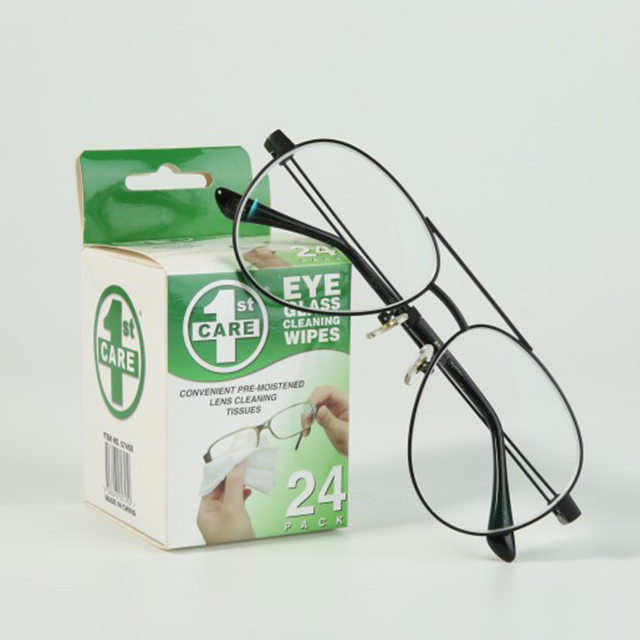
This model works best for independent opticians, clinics, and offices needing immediate inventory. They require functional products without specific branding requirements. The primary advantage is access to low MOQs and exceptionally fast lead times. You bypass the lengthy tooling and artwork approval phases. You sacrifice the ability to build brand equity. You also cannot control the exact chemical formulation or substrate dimensions, limiting your ability to differentiate in a crowded market. Stock products utilize generic foil sachets and standard liquid blends.
This approach is ideal for retail brands, e-commerce sellers, and large distributors. They want to market proprietary glasses wipes tailored to their specific audience. Strategic scaling involves a phased progression. Start by white-labeling standard specifications with custom outer boxes. As sales volume grows, develop fully custom sachets and proprietary liquid formulas.
Customization vectors are extensive. You specify the exact wipe dimensions. Standard sizes are common, but generously sized 12cm x 15cm cloths offer a premium user experience. You control the sachet artwork, the outer box configuration, and the specific chemical additives. This model requires longer lead times but builds lasting brand value.
Sourcing Model | Typical MOQ | Lead Time | Customization Level | Upfront Tooling Costs |
|---|---|---|---|---|
Off-the-Shelf Wholesale | 1,000 - 5,000 units | 1 - 2 Weeks | None (Stock product) | Zero |
White Label (Custom Box Only) | 10,000 - 20,000 units | 3 - 4 Weeks | Outer packaging only | Low |
Full Custom OEM | 50,000 - 100,000+ units | 6 - 8 Weeks | Substrate, Liquid, Sachet, Box | High (Printing plates) |
Manufacturers offer lower MOQs for white label or stock formulations by utilizing existing production runs. They simply apply custom secondary packaging to standard sachets. This allows orders to start around 10,000 units. Custom formulation MOQs are significantly higher. You often need 100,000 or more units to justify the setup costs. Mixing proprietary solutions, such as specialized pre-moistened sunglasses cleaning wipes, requires dedicated production time. Factories must thoroughly clean mixing tanks, flush the fluid lines, and recalibrate liquid filling machines for custom runs. The downtime between different chemical batches dictates the high MOQ threshold.
Negotiating smaller initial batches mitigates risk. Provide a framework for pilot orders. You might agree to pay a slight premium per unit for a smaller initial run. This allows you to test market viability and supplier reliability before committing to a massive purchase order. Understand tooling and plate costs. Custom printing plates for laminated sachets and cardboard boxes require upfront investment. These costs are amortized over larger orders, reducing your effective unit price on subsequent production runs. You can also negotiate split shipments, where the factory produces the full MOQ but holds half the inventory in their warehouse for a later delivery date.
Substrate costs heavily influence the final price. Standard wood pulp and paper blends are economical and functional. Premium aerospace-grade materials cost more but offer superior, lint-free performance. Consumer demand for biodegradable, plastic-free substrates is rising rapidly. Sourcing specialized cellulose or bamboo-based materials impacts manufacturing costs but significantly boosts brand equity and aligns with eco-conscious retail trends.
Chemical formulations also drive costs. Basic surfactant and Reverse Osmosis (RO) water blends are inexpensive. Premium additives increase expenses due to raw material costs and complex mixing requirements. Packaging complexity directly affects retail configurations. Single-pack sachets differ in production cost from 30, 50, 100, or 200-count bulk packs. Dispenser boxes improve shelf presence but require die-cutting, gluing, and add shipping weight.
Evaluate kitting opportunities. Bundling wipes with complementary products creates premium retail SKUs. Adding a high-quality microfiber cloth or a small liquid spray bottle to a box of wipes increases the perceived value. This strategy improves profit margins and differentiates your product from basic commodity offerings.
Economies of scale dictate that unit prices drop at specific volume milestones. You will typically see significant price breaks at 50,000, 100,000, and 500,000 units. You must balance this against inventory carrying costs. Securing a lower unit price ties up working capital. Holding excess inventory carries the risk of exceeding the moisture shelf-life if sell-through rates are miscalculated. Accurate demand forecasting is mandatory to optimize this balance. Warehousing heavy pallets of liquid-based products also incurs monthly storage fees that eat into the initial volume discount.
Isopropyl Alcohol (IPA) blends dominate the optical market. They offer fast-drying, streak-free benefits. The alcohol effectively dissolves skin oils, cosmetics, and environmental grime. It evaporates rapidly, leaving the lens clear. Standard optical blends utilize 15% to 30% Isopropyl Alcohol mixed with Reverse Osmosis (RO) water. The RO water is critical. Standard tap water contains trace minerals like calcium and magnesium. When the water evaporates, these minerals remain on the lens as white streaks. RO water ensures a completely pure base liquid.
Alcohol-free alternatives rely on specialized surfactant-based formulas. These are required for highly sensitive plastic coatings or specific regulatory markets that restrict volatile organic compounds (VOCs). The primary trade-off with alcohol-free formulas is a noticeably longer drying time. Users must often wipe the lens longer to clear the residual moisture.
Hydrophilic polymers are the core active ingredient in anti-fog lens wipes. These polymers lower the surface tension of water. When moisture hits the lens, it forms a flat, transparent film rather than opaque, scattering droplets. Incorporating these polymers alters the manufacturing process and increases the base chemical cost. Scenting and odor control also require careful consideration. Light fragrances, like refreshing ocean or citrus scents, mask harsh chemical odors. Professional clinical settings often prefer unscented products to avoid potential allergens and maintain a sterile environment.
Seal integrity is a massive risk factor in mass production. Heat sealers on packaging lines can fluctuate in temperature. A minor drop causes micro-leaks in the sachet seals. The liquid evaporates during transit, and the customer opens a completely dry wipe. Always request AQL (Acceptable Quality Limit) inspection reports. Implement strict AQL 1.5 standards for critical defects like seal failure.
Mandate vacuum leak testing for sachets during the production run. This involves placing a random sample of sealed sachets into a water-filled vacuum chamber. The chamber is depressurized to -80kPa for 30 seconds. If bubbles emerge from the sachets, the heat seal is compromised, and the entire batch must be quarantined.
Linting and streaking are common performance failures. Dull cutting blades in the factory cause frayed edges on paper substrates. This leaves visible lint residue on the lens. Incorrect liquid-to-wipe ratios cause streaking. If the substrate is oversaturated, the liquid pools on the lens. If it is undersaturated, the wipe drags and fails to clean. Precise calibration of the liquid dosing nozzles is mandatory.
Demand MSDS (Material Safety Data Sheets) for all chemical formulations. This documentation is non-negotiable. It ensures safe transport, regulatory compliance, and provides exact chemical breakdowns. Verify factory certifications for overseas manufacturers. Look for ISO 9001 for Quality Management systems. Check for ISO 13485 if the factory produces medical-grade optical supplies.
When auditing a new factory, follow a strict verification protocol:
Request the current ISO 9001 certificate and verify its validity with the issuing body.
Review the factory's internal AQL inspection logs for the past three months.
Inspect the water purification system to ensure they use industrial-grade Reverse Osmosis.
Check the maintenance logs for the liquid filling and sachet sealing machines.
Shipping liquid-bearing products requires careful logistics planning. High-count bulk boxes are dense and heavy, significantly impacting freight costs. You must account for potential temperature sensitivities during transit. Shipping in uninsulated containers during winter can freeze the liquid, degrading the surfactant emulsion. Extreme heat can cause sachets to bloat and burst. Work with experienced freight forwarders who understand liquid logistics.
Request a standard sample pack from 3 to 4 shortlisted suppliers to evaluate baseline quality and packaging materials.
Conduct physical streak, lint, and moisture tests across multiple surfaces, including polycarbonate and multi-coated lenses.
Verify all factory ISO certifications and request sample AQL inspection reports from previous production runs.
Negotiate a small pilot order to test market reception and logistics before committing to a full-scale production run.
A: Custom private label orders typically require an MOQ of 50,000 to 100,000 individual sachets. This volume justifies the setup costs for custom printing plates and proprietary chemical mixing. Stock items utilizing standard sachets with custom secondary packaging often start at much lower MOQs, sometimes around 10,000 units.
A: Yes. Anti-fog wipes require specialized hydrophilic polymer additives that prevent condensation from forming opaque droplets. These complex chemical formulations and the specialized production runs needed to apply them accurately increase the base manufacturing cost compared to standard isopropyl alcohol blends.
A: The typical shelf life is 18 to 24 months. This duration heavily depends on the barrier properties of the individual sachet material. High-quality multi-layer laminates with aluminum foil linings prevent moisture and alcohol evaporation, ensuring the wipe remains effective until the expiration date.
A: Generally, yes. You must ensure the chemical formulation is free of harsh solvents that could degrade the polarized film or delicate anti-reflective coatings. Always verify material safety with the manufacturer and test the wipes on a small, inconspicuous area first.
A: Request comprehensive MSDS documentation, recent AQL inspection reports, and proof of ISO 9001 certification. Before placing a large order, always order sample packs to conduct physical tests for seal integrity, moisture retention, linting, and streak-free performance on various optical surfaces.
A: Streaking usually occurs due to an incorrect liquid-to-wipe ratio during manufacturing. If the substrate is oversaturated, excess liquid pools on the lens and dries unevenly. It can also happen if the chemical formulation lacks the proper fast-drying agents like isopropyl alcohol or uses impure water.


