
English 
Landline:
+86-571-8233-3525
Telephone:
Telephone:
+86-150-6710-5089
+86-138-6743-1140
Address:
Building 41 workshop, No.17, Xueyuan road, Jiyang street, Zhuji city, Zhejiang Province, China


Views: 0 Author: Site Editor Publish Time: 2026-08-25 Origin: Site


Pre-moistened wipes offer a fast way to clear smudges off your optics. Many photographers and glasses wearers hesitate to use them, worrying about permanently scratching expensive prescription eyewear or precision camera glass. That fear makes sense. Using the wrong chemical mix or wiping too often strips anti-reflective coatings and leaves micro-scratches. A basic maintenance habit can easily ruin a high-end lens.
You need a realistic, chemistry-backed framework to figure out safe usage frequencies. You have to evaluate wipe materials and pick the right cleaning protocol for specific optical surfaces. By understanding the mechanical and chemical interactions, you can keep your lenses clear without destroying their structural integrity or specialized coatings.
Frequency Depends on Surface and Coating: Daily use is generally safe for uncoated glass, but high-end AR-coated eyeglasses, anti-fog lenses, and multicoated camera lenses require restricted use to prevent chemical degradation.
Pre-Cleaning is Non-Negotiable: Using any wipe on a dry, dust-covered lens acts as sandpaper; particulate removal via air blower or running water must precede wipe application.
Chemical Composition Dictates Safety: Isopropyl alcohol-based wipes evaporate quickly but risk degrading specialized lens cements, oleophobic layers, and plastic LCD screens over time compared to surfactant-based alternatives.
Application Context Matters: Pre-moistened wipes are optimal for field work and travel, while controlled environments favor a wet-wash (warm water and mild dish soap) or dedicated microfiber and spray system.
Not all pre-moistened tissues are manufactured to the same standards. The safety and efficacy of lens cleaning wipes depend entirely on two factors: the chemical solution saturating the material and the physical structure of the substrate itself. Understanding these components prevents accidental damage to sensitive optical gear.
The liquid solution inside a sealed wipe packet performs the heavy lifting by dissolving oils and lifting debris. Most commercial options rely on an isopropyl alcohol base, typically ranging from 60% to 70% concentration. This chemical interaction breaks down the lipid bonds found in fingerprints and facial oils. The primary advantage of alcohol is its rapid evaporation rate. The solvent flashes off the lens surface almost immediately, leaving behind a streak-free finish without requiring excessive buffing.
Prolonged, high-frequency exposure to isopropyl alcohol poses a long-term risk of solvent damage to polycarbonate plastics and specialized optical coatings. Pure glass remains largely unaffected. However, the microscopic layers of metallic oxides used in modern lens coatings degrade under constant chemical stress. If you shoot in high humidity or sweat heavily onto your glasses, the combination of salt, skin oils, and daily alcohol application accelerates this wear.
Surfactant-based formulas offer an alternative approach. Instead of relying on aggressive solvents to dissolve oils, surfactants reduce the surface tension of the liquid. They encapsulate dirt and oil molecules so you can wipe them away. These formulas are safer for delicate coatings and plastics. They evaporate slower than alcohol, sometimes requiring a secondary dry wipe or a longer drying period to achieve a completely streak-free result.
The physical material of the wipe is just as critical as the chemical solution. Standard paper-based wipes, often found in bulk generic brands, frequently contain wood pulp. Wood pulp fibers possess a relatively high abrasive index. They feel soft to the touch, but at a microscopic level, these fibers are rigid and jagged. When dragged across a delicate polycarbonate lens or a specialized coating, wood pulp increases the risk of micro-scratches over repeated uses.
Premium wipes utilize aerospace-grade or optical-grade synthetic tissues. These materials, created through melt-blown or spunlace manufacturing processes, feature softer, more pliable fibers. Synthetic substrates trap debris within their matrix rather than pushing it across the lens surface. Material hardness directly correlates with the preservation of optical clarity. Selecting a wipe made from synthetic fibers rather than wood pulp reduces the physical abrasiveness applied during routine maintenance.
You can test the quality of your current wipes using a few simple field checks:
Tear the wipe in half. If it rips easily with jagged, dusty edges, it likely contains high amounts of wood pulp.
Stretch the material. Synthetic fibers will stretch and deform before breaking, showing their woven matrix.
Check the residue. Wipe a clean glass mirror. If you see tiny white lint particles left behind, the substrate is shedding and unsuitable for precision optics.
Defining a maintenance routine for prescription eyewear requires balancing visual clarity for daily tasks with preserving the lifespan of the lenses. Eyeglasses are subjected to constant environmental contaminants, from airborne dust to natural facial oils, necessitating regular intervention.
Baseline frequency recommendations depend heavily on your environment and habits. For standard lenses without highly sensitive coatings, limiting the use of glasses wipes to a maximum of one to two times daily is a safe threshold. This frequency handles the inevitable smudges and fingerprints accumulated during a normal workday without overexposing the lens to friction and solvents.
Wipes should not be the sole method of maintenance. When eyeglasses accumulate heavy grease, mud, or significant particulate debris, you must substitute wipes with a deep clean protocol. Deep cleaning removes abrasive particles entirely, preventing the friction damage that occurs when wiping heavily soiled lenses.
Follow this deep clean protocol for heavy soiling:
Rinse the glasses under lukewarm running water to flush away loose silica and dust.
Apply a single drop of mild, lotion-free dish soap to your wet fingertips.
Gently rub the lenses, frames, and nose pads to break down heavy lipid layers.
Rinse thoroughly under the tap until all soap residue is gone.
Shake off excess water and dry with a dedicated, clean optical microfiber cloth.
Modern prescription lenses feature complex, microscopically thin layers of anti-reflective (AR), anti-fog, UV-blocking, and oleophobic (oil-repellent) coatings. The degradation curve of these coatings accelerates when exposed to frequent chemical solvents.
Factory-applied anti-fog coatings are highly vulnerable to alcohol stripping. The chemical structure that prevents condensation dissolves under high-concentration isopropyl alcohol. Oleophobic coatings, designed to make fingerprints easy to wipe away, lose their efficacy after repeated exposure to harsh solvents.
Coating Type | Vulnerability to Solvents | Signs of Degradation |
|---|---|---|
Anti-Reflective (AR) | Medium | Crazing (spiderweb cracks), uneven purple or green tint shifting. |
Anti-Fog | High | Permanent smudging, complete loss of condensation resistance. |
Oleophobic | High | Fingerprints stick instantly, surface feels tacky, hard to wipe dry. |
Uncoated Glass | Low | None. Glass remains chemically inert to standard wipe solvents. |
To minimize friction and maximize the efficacy of pre-moistened wipes, adopt a strict step-by-step application method. Proper technique mitigates the risks associated with chemical and physical abrasion.
Unfold the wipe completely upon removing it from the packet. Allow the wipe to rest in the air for three to five seconds. This brief pause allows the most volatile chemical compounds to slightly dissipate before making direct contact with the lens, reducing the immediate solvent shock to delicate coatings.
Always clean the optical lenses first while the wipe is at its cleanest and most lubricated state. Use gentle, circular motions starting from the center of the lens and moving outward to the edges. Once the lenses are pristine, utilize the remaining moisture on the wipe to clean the frames, hinges, and nose pads. Cleaning the nose pads first picks up concentrated sebum and facial oils, which you would then smear directly across the lenses, causing cross-contamination and severe streaking.
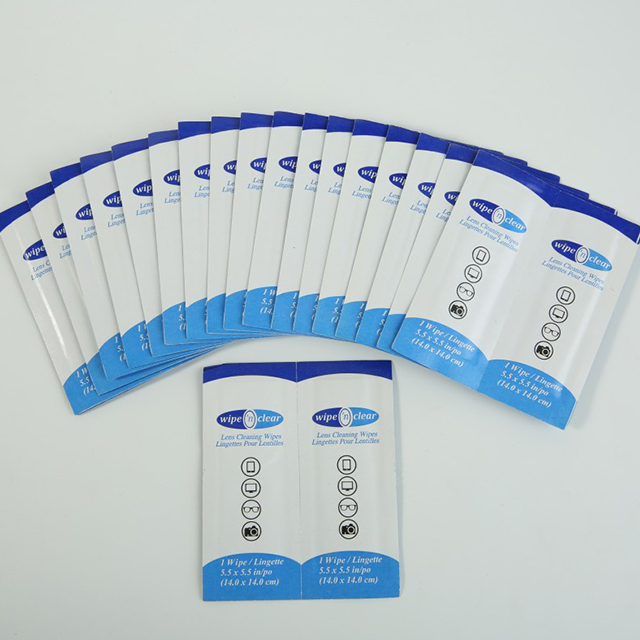
Cleaning professional photography equipment carries significantly higher implementation risks than maintaining daily eyewear. A single scratch on a front element or internal lens group directly impacts image quality, introduces flaring, and drastically reduces the resale value of the equipment. The approach to using wipes on precision optics must be highly conservative.
Modern photographic lenses feature highly advanced, multi-layer nano-coatings and magnesium fluoride layers designed to maximize light transmission and minimize chromatic aberration. These coatings are exceptionally thin and fragile.
Reserve camera lens cleaning wipes strictly for removing organic compounds that cannot be cleared by air or dry brushing. This includes fingerprints, accidental oil smudges, or dried sea spray from coastal shooting. Wipes should never be used for routine dust removal. If a lens merely has loose dust on the front element, introducing a chemical wipe is an unnecessary escalation of risk.
One of the most overlooked dangers of using pre-moistened wipes on camera gear is capillary action. When a wipe contains excess liquid, the pressure of wiping squeezes droplets out of the substrate. Through capillary action, this liquid rapidly seeps into the microscopic gaps between the lens glass and the metal or plastic barrel.
If alcohol-based solvents penetrate the lens barrel, they dissolve the internal optical cements used to bond lens groups together, leading to permanent separation or internal hazing. These solvents also degrade the rubber weather gaskets designed to keep moisture and dust out of the lens helicoids.
Explicitly avoid using alcohol-based spectacle wipes on polycarbonate camera bodies, rear LCD screens, and electronic viewfinders (EVFs). The plastics used in these components react aggressively to isopropyl alcohol. Exposure causes the LCD screen to permanently cloud, discolor, or develop micro-cracks.
The environment dictates the tool. Position wipes as an essential, low-frequency emergency tool for field kits. When shooting on location in a dusty desert or a humid rainforest, access to running water and controlled conditions is impossible. A pre-moistened wipe is the safest way to quickly remove a fingerprint that is ruining a shot.
In a controlled studio setting, air blowers and specialized lens pens serve as the primary line of defense. Routine maintenance consists of blowing off loose dust and using a soft, retractable brush. Wet cleaning with a wipe only occurs when visual inspection reveals stubborn organic residue.
A common industry warning suggests that pre-moistened wipes inherently cause optical haze over time. Deconstructing this claim requires examining friction, particulate matter, and evaporation rates.
The wipe material itself rarely causes scratches, assuming it is made from optical-grade synthetic fibers rather than wood pulp. The true culprit behind optical haze and micro-scratches is dragging silica across the lens under the pressure of the wipe. Silica ranks highly on the Mohs hardness scale. It is significantly harder than glass, polycarbonate, and optical coatings.
When a wipe traps a microscopic grain of sand and drags it across the lens, it leaves a permanent gouge. Over months of repeating this error, these microscopic gouges accumulate, creating a cloudy effect known as optical haze. You must use an air blower, a soft optical brush, or a running water rinse prior to applying any wipe. Pre-cleaning removes the abrasive particulates before physical contact occurs.
The moisture level of the wipe directly impacts its lubricity. The liquid acts as a buffer, reducing friction between the substrate and the lens coating. Quick-dry lens wipes evaporate rapidly, preventing streaks but creating danger if you continue to wipe after the moisture is gone.
Continuing to rub the lens after the wipe dries out drastically increases friction. Without the lubricating barrier of the solvent, the dry fibers drag harshly against the coating. Dry rubbing generates a static charge on the lens surface. This static charge acts as a magnet, pulling airborne dust back onto the freshly cleaned lens and negating the maintenance effort.
Finalizing an optical maintenance toolkit requires understanding the trade-offs between different solution categories. Pre-moistened wipes, dry microfiber cloths, and bottled optical sprays all serve specific purposes based on portability, contamination control, and long-term costs.
The primary advantage of single-use wipes is guaranteed sterility out of the packet. Every time you open a new wipe, you use a medically clean, uncontaminated surface. This eliminates the risk of transferring trapped oils and abrasive particles found in unwashed microfiber cloths.
Microfiber cloths trap grease and dust effectively, but they hold onto these contaminants tenaciously. If a microfiber cloth is stuffed into a pocket, thrown into a camera bag, or used multiple times without being laundered, it becomes a hazard. Wiping a lens with a contaminated cloth smears old oils across the glass and drags trapped grit over the coatings.
Single-use wipes offer superior contamination control but present drawbacks regarding recurring expense and environmental impact. Daily disposable wipes generate significant paper and plastic waste over a year of use. For users who clean their glasses multiple times a day, the cost of purchasing boxes of wipes accumulates quickly.
High-quality, washable microfiber systems paired with dedicated optical sprays offer a more sustainable and cost-effective long-term solution. A single bottle of optical spray and three rotating microfiber cloths can last for years, providing excellent cleaning power with minimal environmental footprint. Wash these cloths regularly in a dedicated laundry bag without fabric softener to maintain their efficacy.
Apply the following rubric based on user environment, lens type, and contamination type to simplify your selection process.
Scenario / Environment | Contamination Type | Recommended Tool | Rationale |
|---|---|---|---|
Travel / Field Work | Fingerprints, accidental smudges, sea spray | Pre-moistened Lens Wipes | Guaranteed sterility; highly portable; requires no secondary drying tools. |
Home / Office (Daily Eyewear) | Standard daily facial oils, light dust | Microfiber Cloth + Optical Spray | Cost-effective for high-frequency use; gentle on AR and anti-fog coatings. |
Studio / Controlled Environment (Cameras) | Loose dust, pollen, lint | Air Blower + Soft Brush | Zero physical contact with the lens prevents any risk of chemical degradation or friction scratches. |
Heavy Soiling (Mud, thick grease) | Abrasive grit, heavy lipid layers | Lukewarm Water + Mild Dish Soap | Flushes abrasive particles away safely before any physical wiping occurs. |
Audit your current cleaning supplies and throw away any loose, visibly soiled, or unwashed microfiber cloths harboring abrasive grit.
Purchase a high-quality silicone air blower to blast particulate matter off your lenses before any physical wiping occurs.
Select a specialized, optical-grade wipe formulated specifically for your gear, avoiding high-concentration alcohol if you rely on factory anti-fog lenses.
Establish a strict wet-wash routine at your home sink for heavily soiled glasses, reserving pre-moistened wipes exclusively for travel and field emergencies.
A: It is not recommended. Spectacle wipes often contain higher concentrations of isopropyl alcohol and use rougher paper substrates. These degrade the fragile nano-coatings and magnesium fluoride layers on professional camera lenses. Always use wipes specifically formulated and certified for precision camera optics.
A: Yes, prolonged and frequent use of alcohol-based wipes degrades specialized coatings. Factory-applied anti-fog coatings are highly susceptible to being stripped by isopropyl alcohol. If you have these coatings, opt for surfactant-based, alcohol-free wipes and limit your usage frequency.
A: Never wipe a dry, dusty lens. You must remove loose particulate matter to prevent micro-scratches. Use a silicone air blower to blast away dust, or gently sweep the surface with a clean, retractable optical brush. For eyeglasses, rinsing under lukewarm running water is the best preparation.
A: No. Quick-dry wipes rely on high concentrations of alcohol to evaporate rapidly. This alcohol causes polycarbonate plastics found on camera bodies, EVFs, and LCD screens to cloud, discolor, or crack. Use dry microfiber cloths or screen-specific, alcohol-free cleaners for these components.
A: Cloudiness occurs for two reasons. Wiping a lens covered in heavy facial oils without pre-cleaning smears the grease. If the wipe has dried out, rubbing it generates static and friction, leaving a hazy residue. Always unfold the wipe and use it while it is still adequately moist.
A: No. Pre-moistened wipes are strictly single-use. Once a wipe drags across a lens, it traps dirt, oils, and microscopic abrasive particles. Reusing it guarantees you will drag those trapped contaminants back across your optical surfaces, risking severe scratches.
A: The safest daily alternative for eyeglasses is a quick wash with lukewarm water and a single drop of mild, lotion-free dish soap, followed by drying with a clean microfiber cloth. For cameras, an air blower combined with a clean, dry optical microfiber cloth is the safest daily defense.


