
English 
Landline:
+86-571-8233-3525
Telephone:
Telephone:
+86-150-6710-5089
+86-138-6743-1140
Address:
Building 41 workshop, No.17, Xueyuan road, Jiyang street, Zhuji city, Zhejiang Province, China


Views: 0 Author: Site Editor Publish Time: 2026-07-30 Origin: Site


Premium optics require a significant financial investment. Prescription glasses, specialized camera lenses, and polarized sunglasses demand pristine surfaces to function correctly. Yet, improper cleaning methods frequently cause irreversible damage. Industry advice often conflicts regarding lens maintenance. The convenience of disposable wipes clashes directly with documented risks like micro-scratches, chemical haze, and stripped anti-reflective coatings. Modern environmental factors complicate this further. Increased needs for clear vision, especially when managing condensation from face masks or working in dusty field conditions, drive frequent reliance on quick-cleaning solutions. This guide provides an evidence-based framework for evaluating wipe materials and chemical formulations. You will learn a safe, step-by-step cleaning methodology designed to preserve lens integrity while maintaining optical clarity.
Pre-Cleaning is Mandatory: Dry-wiping or applying a wipe directly to a dust-covered lens drags abrasive particulates across the surface, causing micro-scratches regardless of wipe quality.
Formulation Matters: Alcohol-based wipes evaporate quickly but can degrade specific plastic lenses and AR coatings over time; alcohol-free alternatives offer safer long-term maintenance for sensitive optics.
Material Quality Dictates Safety: Standard paper-based wipes pose higher friction risks compared to engineered soft touch lens wipes made from micro-fine tissue.
Technique Over Product: Unfolding the wipe completely and using single-direction or slow circular motions with minimal pressure is critical to preventing streaks and optical damage.
Brand Verification is Crucial: Not all wipes are created equal; substituting established optical-grade wipes with unverified generic brands introduces unknown solvents that can permanently damage lens coatings.
Defining a truly clean lens establishes the baseline for proper maintenance. A clean optical surface exhibits zero streaks under direct light. It maintains entirely intact chemical coatings. It shows absolutely zero micro-abrasions when viewed through a loupe. Achieving this state requires understanding the physical interactions between the lens, the debris, and the cleaning medium. Failing to respect these interactions guarantees gradual optical degradation. Field technicians and daily wearers alike often misjudge the amount of abrasive material resting on their lenses before they begin wiping.
Ambient dust consists largely of silica and microscopic mineral fragments. Silica ranks high on the Mohs hardness scale, typically hitting a 7. It easily outclasses the hardness of polycarbonate lenses (which sit around a 1 or 2) and standard optical glass (around 5.5). When dust settles on your eyewear, it acts like invisible sandpaper. Pressing a dry cloth or an un-prepped wipe against this surface traps the silica. Moving the wipe drags these hard particles across the softer lens material. This action carves microscopic trenches into the glass. Over time, thousands of these micro-scratches scatter incoming light. This scattering causes the permanent cloudy haze often seen on older glasses.
Common abrasive contaminants encountered daily include:
Silica dust from concrete, drywall, and urban environments.
Microscopic metal shavings from transit systems or machine shops.
Salt crystals from coastal air or dried sweat.
Carbon particulates from vehicle exhaust.
Modern lenses feature complex, microscopic layers applied via vacuum deposition. These include anti-reflective (AR), ultraviolet, and oleophobic treatments. These layers measure only nanometers in thickness. Harsh chemical solvents interact aggressively with these delicate treatments. High-concentration isopropyl alcohol cuts grease effectively but attacks the chemical bonds of certain coatings. Repeated exposure to uncalibrated solvents strips the oleophobic layer entirely. Once the oleophobic layer degrades, the lens attracts skin oils faster and becomes significantly harder to clean. Protecting these coatings requires strict control over the chemicals applied to the surface.
The market offers diverse optical cleaning solutions. You must categorize these products based on two primary factors. The first is the chemical makeup of the cleaning fluid. The second is the physical substrate material carrying that fluid. Understanding the intersection of these two elements dictates whether a product is safe for your specific optics.
The physical material of the wipe directly impacts surface friction. Standard generic wipes often utilize abrasive wood-pulp paper blends. Wood pulp contains rigid cellulose fibers and lignin that resist bending. These fibers create high-friction contact points on the lens. Conversely, premium soft touch lens wipes utilize engineered micro-fine tissue. Micro-fine tissue features high porosity and flexible fibers. This structure absorbs and traps microscopic dirt particles within the material matrix. Trapping the dirt prevents the wipe from pushing abrasive debris across the glass.
Fluid dynamics play a critical role in safe lens maintenance. Excessive moisture causes severe structural problems for eyewear. Liquid that fails to evaporate quickly will pool at the lens-frame junction. Capillary action pulls this pooled liquid deep into the bevel. Over time, trapped solvents degrade the adhesives holding the frame together. They also cause metal screws to oxidize and acetate frames to discolor. Using quick-dry lens wipes prevents this pooling entirely. Rapid evaporation ensures the solvent lifts the oils and vanishes before gravity pulls the liquid into vulnerable frame crevices.
Cleaning fluids generally fall into two chemical profiles. Isopropyl and ethanol blends dominate the market. These alcohols break down heavy skin oils and evaporate almost instantly. However, they pose risks to vintage lenses and soft plastics. Surfactant-based aqueous solutions provide the alternative. These alcohol-free formulas use specialized soaps to encapsulate oils. They require slightly more wiping to dry completely but offer superior safety for highly sensitive, multi-coated optics.
Purchasing unverified, off-brand wipes introduces severe risks. Generic manufacturers rarely calibrate their solvent concentrations for delicate optical coatings. They often use industrial-grade alcohols to reduce manufacturing costs. Trusting established optical manufacturers ensures chemical safety. Optical-grade brands test their formulas specifically against modern anti-reflective and polarized treatments. This verification guarantees the solvent will clean the surface without compromising the nanometer-thick chemical layers.
Comparison of Lens Wipe Substrates and Formulations | ||||
Wipe Material | Chemical Formulation | Evaporation Rate | Best Use Case | Primary Risk |
|---|---|---|---|---|
Wood-Pulp Paper | High-Concentration Alcohol | Very Fast | Industrial safety glasses | Micro-scratches and coating degradation |
Micro-Fine Tissue | Calibrated Alcohol Blend | Fast | Standard prescription eyewear | Pooling if wipe is over-saturated |
Micro-Fine Tissue | Surfactant-Based (Aqueous) | Moderate | Sensitive multi-coated camera lenses | Streaking if not wiped until dry |
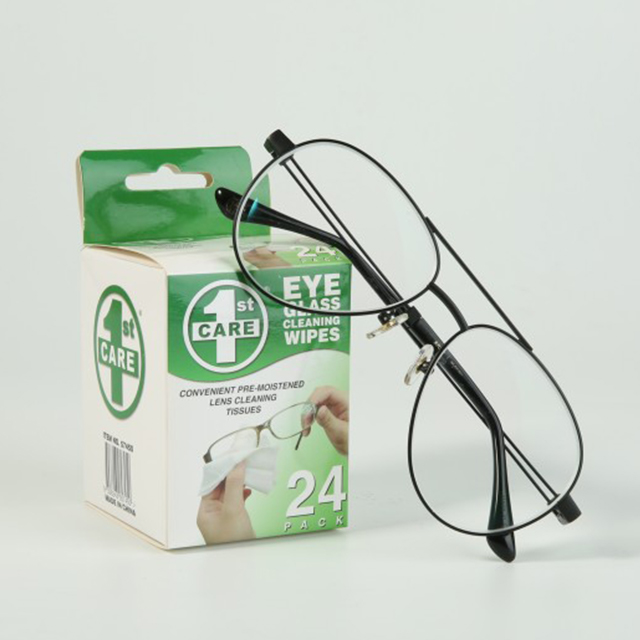
Daily maintenance of prescription eyewear requires specific protocols. Polycarbonate and high-index lenses dominate this category. These materials are inherently softer than traditional glass. They rely entirely on hard-coatings and anti-reflective layers for durability. Managing daily smudges, eyelash oils, and facial condensation demands a balanced approach. You must remove the oils without over-exposing the lenses to harsh chemicals. Select wipes with calibrated, low-concentration solvents. This approach maintains the integrity of the AR coating while providing clear vision.
Photographic lenses operate under strict optical tolerances. These lenses feature complex fluorine and multi-coated elements designed to eliminate ghosting and flare. Photographers cannot treat these surfaces like standard eyeglasses. You must use a silicone blower brush to displace ambient dust before applying any wipe. Standard spectacle wipes may contain surfactants that leave microscopic residues. These residues degrade image sharpness and cause autofocus hunting in extreme lighting conditions. Always verify that your chosen wipe is explicitly rated for precision photographic gear.
Sun protection eyewear introduces unique structural vulnerabilities. Polarized films and mirrored finishes require specialized care. Mirrored coatings sit on the absolute exterior of the lens and scratch easily. Polarized layers are often sandwiched between plastics, but the edges remain exposed at the frame junction. Applying pre-moistened sunglasses cleaning wipes helps manage heavy sunscreen, salt spray, and sweat smudges safely. However, improper solvent use risks chemical delamination. Delamination occurs when solvents attack the adhesive holding the polarized film, causing the lens layers to separate permanently and form blind spots.
Consistency prevents optical damage. Establishing a rigid, standardized operating procedure ensures safety. This protocol applies equally to daily maintenance and occasional heavy-duty cleaning in the field. Memorize these steps to eliminate the mechanical errors that cause micro-scratches.
Never let a wipe touch dry, dusty glass. You must remove loose particulates first. Use a manual air blower to blast dust off the surface. If a blower is unavailable, rinse the lenses briefly under lukewarm tap water. This initial displacement removes the silica fragments that act like sandpaper. Skipping this step guarantees surface abrasion. In field environments where water is scarce, a few sharp breaths can dislodge larger particles, though a dedicated blower remains superior.
Do not use the wipe straight out of the packet while it remains folded. You must unfold the wipe in its entirety. Unfolding maximizes the available surface area. It also allows the concentrated alcohol to vent slightly into the air. This brief venting prevents over-saturation. Over-saturated wipes leave heavy liquid trails that dry into frustrating streaks. Venting the wipe for two to three seconds optimizes the moisture level for a clean sweep.
Isolate the cleaning zones. Use a fresh, unused section of the unfolded wipe for the front of the right lens. Shift your grip to a clean section for the back of the right lens. Repeat this isolation for the left lens. This technique prevents cross-contamination. It ensures you do not drag heavy skin oils from the nose bridge area across the center of your field of vision.
Mechanical force destroys lens coatings. Apply absolutely zero downward pressure during the cleaning process. Let the chemical solvent do the work. Use a slow circular motion. Start from the exact center of the lens and spiral outward toward the edges. This motion pushes suspended dirt away from your primary field of vision and moves it toward the frame where it causes less visual interference.
The junction where the lens meets the frame collects severe grime, dead skin cells, and sweat. Clean these crevices carefully. Fold the wipe over your fingernail to create a precise edge. Glide this edge gently along the bevel. Do not force the wipe deep into the gap. Forcing material into the bevel packs the dirt tighter, stresses the frame screws, and pushes moisture into the adhesive layers.
Evaluating maintenance systems requires looking at long-term utility. Daily disposable wipes offer unmatched convenience for travel, outdoor photography, and field work. A dedicated microfiber cloth paired with a liquid optical spray system presents a different approach for stationary environments. You must weigh the immediate convenience of sterile, single-use packets against the maintenance required to keep a microfiber cloth clean. A contaminated microfiber cloth will destroy a lens instantly, making the sterile nature of single-use wipes highly advantageous for unpredictable environments.
Disposable products carry inherent environmental burdens. Single-use wipes generate consistent paper waste. The foil-lined packaging required to prevent solvent evaporation adds non-recyclable materials to landfills. Users committed to reducing their environmental footprint often reserve disposable wipes strictly for travel and field operations. They rely on reusable systems for home maintenance to minimize daily waste generation, striking a balance between optical safety and environmental responsibility.
Optometrists frequently recommend the warm water and mild dish soap method. This approach excels at removing heavy, caked-on grime and thick sunscreen. Dish soap contains powerful surfactants that encapsulate heavy skin oils efficiently. However, this method requires a critical post-wash step. You must dry the lenses gently with a pristine microfiber cloth. If the cloth is contaminated, you will scratch the clean lens. This method proves superior for deep cleaning at a sink, but disposable wipes remain the practical choice for mobile environments and quick touch-ups.
Common Lens Cleaning Risks and Field Mitigations | ||
Identified Risk | Root Cause | Mitigation Strategy |
|---|---|---|
Streaking and Smudging | Heavy facial oils overwhelm the chemical capacity of a single wipe, smearing diluted oil across the glass. | Pre-wash heavily soiled lenses with water. Utilize appropriate quick-dry formulations to prevent residual surfactant trails. |
Accidental Surface Damage | Applying optical solvents to incompatible soft plastics or uncoated electronics. | Maintain a strict "Do Not Use" list. Never apply optical wipes to laptop screens, matte monitors, or VR headset lenses. |
Dry-Friction Scratching | Using a wipe from a compromised foil packet where the solvent has evaporated. | Test wipe moisture upon opening. If the material feels stiff or dry, discard it immediately. Never rehydrate with tap water. |
Frame Discoloration | Excessive solvent pooling on cheap acetate or painted injection-molded frames. | Vent the wipe before use. Keep the wipe focused strictly on the glass, avoiding prolonged contact with the frame material. |
Proper optical maintenance requires discipline and the right materials. Using lens cleaning wipes provides effective, safe results only when paired with strict pre-cleaning protocols. Material selection dictates the long-term safety of your eyewear. You must select wipes based on your specific lens coatings, prioritizing alcohol-free options for sensitive anti-reflective treatments. Always prioritize micro-fine tissue over standard abrasive paper to prevent micro-scratches.
Take the following steps to protect your optics:
Audit your current lens cleaning supplies and discard any abrasive generic paper wipes.
Purchase a dedicated silicone blower brush to remove loose particulates before wiping.
Verify the chemical compatibility of your chosen wipes with your specific anti-reflective or polarized coatings.
Implement the zero-pressure, circular motion technique for all future lens maintenance.
A: Yes, provided you use high-quality, optical-grade wipes. Daily maintenance with premium micro-fine tissue prevents grime buildup safely. Using cheap, abrasive paper alternatives daily causes cumulative wear and micro-scratches. Always pre-clean the lens to remove loose dust before wiping.
A: Exercise caution. Camera lenses feature delicate multi-coatings that differ from standard eyewear. You must use a blower brush to remove abrasive silica dust before applying any wipe. Ensure the wipe formulation explicitly states compatibility with precision photographic optics.
A: High-concentration alcohol can degrade older or cheaper anti-reflective coatings over time. Modern, high-quality AR coatings resist mild solvents better. If you clean sensitive lenses frequently, consider switching to alcohol-free, surfactant-based wipes to maximize the lifespan of the coating.
A: Streaking occurs when excessive wipe moisture mixes with heavy skin oils on the lens. If the wipe is too saturated, the solvent cannot evaporate cleanly. Unfolding the wipe to let it vent slightly and using quick-dry formulations prevents residual surfactant trails.
A: Wipes offer a distinct hygienic advantage because they are single-use and sterile out of the package. Microfiber cloths are highly effective but easily trap abrasive dirt and oils over time. A contaminated microfiber cloth will scratch lenses, whereas a fresh wipe guarantees a clean surface.
A: Discard the wipe immediately. A dried-out wipe loses its lubricating solvent and acts like dry paper against the glass. Continuing to rub a dry wipe across the lens guarantees dry-friction scratching and permanent optical damage. Always open a fresh packet.


