
English 
Landline:
+86-571-8233-3525
Telephone:
Telephone:
+86-150-6710-5089
+86-138-6743-1140
Address:
Building 41 workshop, No.17, Xueyuan road, Jiyang street, Zhuji city, Zhejiang Province, China


Views: 0 Author: Site Editor Publish Time: 2026-07-10 Origin: Site


The end-of-meal experience in fine dining carries significant psychological weight. A guest's final physical interaction before leaving the table is often with a hand wipe. When a high-end culinary journey concludes with a generic, harsh, or poorly packaged product, the disconnect degrades brand perception. Hospitality operators must recognize that every touchpoint reflects the establishment's standards. Sourcing premium restaurant wet wipes requires balancing luxurious guest experience with operational viability. A structured evaluation framework helps procurement managers navigate substrates, formulations, and packaging options. By prioritizing tactile feel and skin safety, restaurants can elevate their service while managing unit economics effectively. The right choice transforms a basic hygiene necessity into a memorable extension of the dining experience.
Material density (GSM) and substrate choice (e.g., bamboo, pure cotton, premium non-woven) are the primary differentiators between standard and luxury wipes.
Skin Friendly Restaurant Wet Wipes require strict evaluation of formulation, prioritizing hypoallergenic, alcohol-free, and pH-balanced ingredients over harsh antibacterial chemicals.
Custom packaging ROI relies on balancing Minimum Order Quantities (MOQs) with shelf-life realities to prevent inventory degradation (drying out).
Supplier vetting must include verifiable claims regarding biodegradability, dermatological testing, and packaging seal integrity.
Establishing baseline success criteria for a premium wipe involves assessing tactile feel, moisture retention, scent profile, substrate aesthetics, and packaging presentation. A luxury wipe must feel substantial, retain adequate moisture, and present flawlessly to align with fine dining standards. Operators cannot afford to overlook the physical characteristics of the wipe itself, as guests immediately notice thin, abrasive, or overly saturated materials.
Standard spunlace non-woven fabrics often lack the heft required for a premium feel. High-end alternatives include 100% cotton, biodegradable bamboo, and thermal-bonded blends. These materials provide superior softness and durability during use. Cotton offers unparalleled absorbency and a traditional textile feel, while bamboo provides a sustainable, naturally smooth alternative that appeals to eco-conscious establishments.
Grams per Square Meter (GSM) measures material density. A higher GSM indicates a thicker, more luxurious wipe. For fine dining, an ideal GSM ranges between 45 and 80. Substrates below 40 GSM tend to tear easily and fail to hold sufficient moisture for effective cleaning. Substrate aesthetics also matter. Premium colors like deep black, off-white, or custom-dyed options, combined with embossed textures, visually signal high quality to the guest. Embossing patterns, such as pearl or mesh designs, not only improve the visual appeal but also enhance the mechanical cleaning ability of the wipe by creating micro-friction against the skin.
Substrate Material | Typical GSM Range | Tactile Feel | Best Use Case |
|---|---|---|---|
Standard Spunlace | 35 - 45 | Thin, smooth | Casual dining, high-volume takeout |
Bamboo Fiber | 45 - 60 | Soft, slightly textured | Eco-conscious upscale dining |
100% Pure Cotton | 50 - 80 | Plush, fabric-like | Fine dining, luxury hospitality |
Thermal-Bonded Blend | 40 - 55 | Sturdy, embossed | Seafood restaurants, steakhouses |
Surface-level sanitizers often rely on aggressive chemicals that strip skin moisture. In contrast, skin-friendly formulations prioritize gentle cleansing. Humectants like aloe vera and glycerin, combined with purified water bases, prevent skin irritation and leave hands feeling refreshed rather than sticky. The liquid solution infused into the wipe must be carefully calibrated; too much liquid causes dripping, while too little results in a dry, ineffective product.
Balancing sanitization with skin safety requires careful formulation. The goal is to defend against common food-borne pathogens while maintaining a gentle profile. Alcohol-free solutions infused with natural antibacterial agents offer a safer alternative for frequent use. Skin Friendly Restaurant Wet Wipes utilize mild surfactants that break down grease and food residue without disrupting the skin's natural acid mantle. This is particularly important in establishments serving finger foods, shellfish, or barbecue, where guests require thorough cleaning without harsh chemical aftereffects.
Scent plays a major role in the dining experience. Unscented wipes avoid interfering with the palate, making them ideal for tasting menus and wine pairings. When a guest uses a heavily perfumed wipe before or during a meal, the fragrance can overpower the subtle aromas of the food and beverage. However, subtle, natural essential oil infusions like lemon, green tea, or lavender can enhance the cleansing ritual at the very end of the meal.
Synthetic fragrances pose a significant risk in high-end hospitality. They can trigger allergies and often leave an artificial, lingering odor that clashes with the culinary environment. Natural extracts provide a cleaner, more refined olfactory experience. If an establishment chooses a scented option, the fragrance should dissipate within seconds of use, leaving only a clean, neutral finish on the hands.
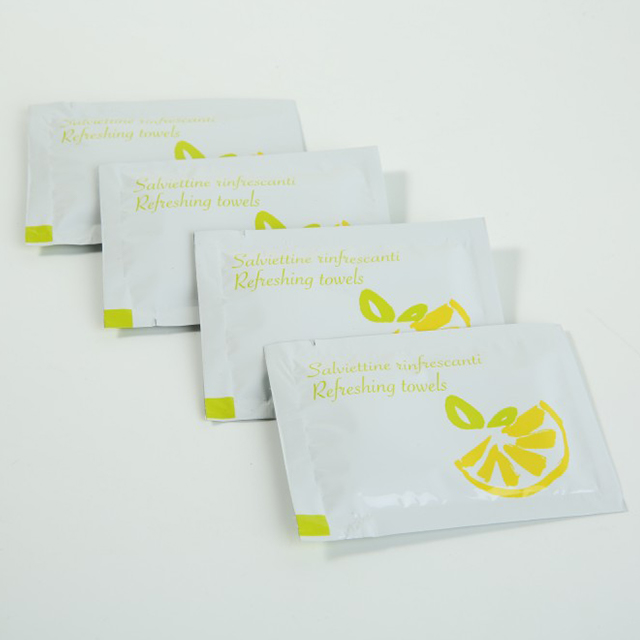
Hospitality operators can choose from various physical delivery methods based on their service style. From high-volume operations to intimate fine dining, selecting the right format ensures operational efficiency and enhances guest satisfaction. The presentation of the wipe is just as important as the wipe itself.
Single sachets offer excellent operational efficiency and hygiene guarantees. They are easy to distribute and require minimal preparation. The outer wrapper material significantly impacts perceived value. Options include matte finishes, gloss, soft-touch films, and foil linings. A high-quality wrapper protects the internal wipe and serves as a canvas for branding. Matte finishes with foil stamping convey understated luxury, while soft-touch films provide a tactile preview of the premium wipe inside.
Serving chilled or cold wipes during summer months or in warm climates provides a refreshing guest experience. These wipes must withstand rapid temperature changes. The wrapper and core requirements must maintain structural integrity and moisture retention even when stored in refrigeration units. Condensation on the outside of the wrapper can cause ink to run or labels to peel if the packaging is not specifically designed for cold storage.
Compressed dry tablets expand when warm or cold water is poured over them tableside. This method offers high experiential value, turning hand hygiene into a brief spectacle. However, it requires operational overhead.
Staff must be trained on the exact volume of water needed to expand the towel without waterlogging it.
Water temperature must be managed carefully depending on the season.
Dedicated presentation trays or small ceramic dishes must be sourced and washed after each use.
Inventory management must account for both the dry tablets and the presentation vessels.
Sourcing pre-moistened, rolled cotton towels involves specific logistics. This traditional service requires equipment like towel warmers or coolers. Maintenance workflows must ensure equipment remains clean and functional, and towels are rotated properly to maintain freshness and temperature. If towel warmers are not cleaned daily, they can develop a musty odor that transfers to the towels, completely ruining the guest experience.
Auditing potential manufacturing partners ensures reliability, quality, and scalability. A structured procurement workflow helps filter out generic manufacturers and identifies specialized hospitality suppliers capable of meeting stringent standards. You need a partner who understands the specific demands of the restaurant industry, not just a general commodities producer.
Needs Analysis: Define the exact guest touchpoint, target GSM, and aesthetic requirements for the wipe. Determine if the wipe will be used pre-meal, post-meal, or during messy courses.
Volume Projection: Calculate monthly usage based on average cover counts across restaurants versus high-volume cafes. Factor in a buffer for peak seasons and private events.
Supplier Screening & RFPs: Draft technical specifications to filter out generic manufacturers from specialized hospitality suppliers. Request details on their manufacturing environment and quality control processes.
Sampling & Testing: Establish a protocol for testing physical samples in real-world dining scenarios. Evaluate heat exposure, scent degradation, and wrapper durability under normal restaurant conditions.
Request specific technical specifications from suppliers regarding printing capabilities. Options include flexographic printing, digital printing, color matching, and foil stamping. Clear communication helps avoid common pitfalls like ink bleeding, misaligned logos on the wrapper core, or low-contrast branding that diminishes the premium feel. When ordering a custom wet wipe, always request a physical proof of the printed wrapper before authorizing the full production run. Digital proofs cannot accurately represent how ink will behave on foil or matte film substrates.
Vetting supplier certifications is mandatory for safety and compliance. Look for ISO certifications, FDA compliance, dermatological testing reports, and cosmetic registrations. It is essential to differentiate between cosmetic hand cleaning claims and regulated antibacterial or biocidal claims to ensure regulatory compliance. If a supplier claims their wipes kill 99.9% of germs, they must provide the corresponding laboratory efficacy reports and regulatory registration numbers.
Custom printing typically impacts Minimum Order Quantities (MOQs). Suppliers require larger runs to justify setup costs for printing plates and machinery calibration. Purchasing Hand Cleaning Restaurant Wet Wipes in bulk optimizes freight logistics, offsets import tariffs, and secures supply chain stability. Balancing MOQs with storage capacity is vital for maintaining inventory health. Ordering a two-year supply might seem economically sound on paper, but if the wipes dry out after twelve months, the wasted inventory negates any bulk purchasing advantages.
Managing wet wipe inventory in a restaurant environment involves practical realities. Proper storage mitigates risks associated with moisture loss, packaging degradation, and environmental impact. Restaurants often relegate bulk supplies to basements or outdoor storage sheds, which can destroy the integrity of the product.
Individually wrapped wet wipes lose moisture over time due to the physics of evaporation through microscopic seal imperfections. External mold and mildew pose significant risks if bulk storage areas are not dry and well-ventilated. Ambient humidity can degrade paper outer-packaging while the internal wipe remains sealed, making the product unpresentable to guests.
Strict storage guidelines include maintaining temperature control and avoiding enclosed high-humidity areas. Implementing First-In, First-Out (FIFO) stock rotation protocols ensures older inventory is used before it degrades. Cartons should be stored off the floor on pallets or shelving units to prevent moisture absorption from concrete floors. Keep inventory away from direct sunlight, heating vents, and refrigeration exhaust fans, as temperature fluctuations accelerate the breakdown of the chemical formulation and the packaging seals.
The industry often misuses the term "flushable." Commercial plumbing systems cannot handle most wipes, leading to severe blockages and expensive plumbing emergencies. Restaurants should advise against flushing any wipe, regardless of the marketing claims on the box. When evaluating eco-friendly claims, look for genuine certifications like FSC-certified materials and compostable substrates to avoid greenwashing. Bamboo and cotton substrates will biodegrade in commercial composting facilities, but they still belong in the waste bin, not the toilet.
Understanding the conceptual trade-offs between upfront investments and long-term brand equity helps procurement managers make informed decisions. Quality investments yield higher guest satisfaction and protect the brand's reputation. A luxury dining experience is built on a foundation of hundreds of small, perfectly executed details.
Upgrading from a generic wipe to a custom luxury wipe impacts unit economics. Modeling this financial impact based on average monthly cover counts reveals the true operational requirement of the upgrade. Bulk ordering strategies for multi-location groups improve cost-efficiency and justify the premium investment. By consolidating purchasing across several restaurant concepts within a hospitality group, operators can meet higher MOQs for custom printing while keeping the per-unit expenditure manageable.
Sourcing cheap alternatives carries hidden costs. Guest complaints regarding chemical smells or harsh textures damage brand perception. Dried-out inventory requires disposal, leading to wasted capital. Investing in quality prevents these issues and ensures a consistent, high-end experience. When a guest struggles to tear open a cheap wrapper, or pulls out a wipe that is bone dry, the final impression of the restaurant is compromised. Quality assurance at the procurement level prevents operational failures on the dining room floor.
Audit your current inventory immediately to determine if your existing wipes align with your brand standards. Define your target GSM, preferred substrate, and formulation requirements based on your specific menu and service style. Initiate contact with specialized hospitality wipe manufacturers to request physical samples and begin the vetting process.
A: Standard shelf life is usually 12 to 24 months. Storage conditions and wrapper seal quality significantly impact longevity. Keep them in cool, dry environments away from direct sunlight and heat sources to maximize shelf life and prevent premature evaporation.
A: Skin-friendly wipes exclude harsh alcohols and parabens. They include pH-balanced, dermatologically tested ingredients and humectants like aloe vera or glycerin to prevent irritation, redness, and dryness after use.
A: Yes, custom printing options like flexographic or digital printing are widely available. Lead times vary by manufacturer, and private labeling typically requires meeting specific Minimum Order Quantities (MOQs) to cover the initial setup and printing plate costs.
A: Substrates like bamboo or pure cotton are biodegradable in proper composting environments. However, no wipe should ever be flushed in commercial plumbing systems due to the high risk of severe pipe blockages, regardless of any "flushable" marketing claims.
A: Antibacterial wipes contain regulated chemical sanitizers designed specifically to kill pathogens. Hand cleaning wipes for restaurants are cosmetic products formulated with mild surfactants for gentle food-residue removal, prioritizing skin comfort and tactile feel.
A: Store bulk inventory in climate-controlled, well-ventilated areas off the floor. Avoid high humidity to prevent outer packaging degradation and mold growth. Implement strict FIFO (First-In, First-Out) rotation to ensure older stock is utilized first.


