
English 
Landline:
+86-571-8233-3525
Telephone:
Telephone:
+86-150-6710-5089
+86-138-6743-1140
Address:
Building 41 workshop, No.17, Xueyuan road, Jiyang street, Zhuji city, Zhejiang Province, China


Views: 0 Author: Site Editor Publish Time: 2026-09-23 Origin: Site


In the highly competitive hospitality sector, the dining experience extends far beyond the plate. Ultimately, the customer journey concludes with how patrons feel walking out your doors. Physical comfort plays a massive role in that final impression. Ever lost a customer over sticky, greasy fingers? Messy meals like slow-smoked barbecue ribs or butter-drenched seafood present a unique operational challenge. Standard dry paper napkins often fail here. They merely push grease around, potentially leaving a negative lasting impression on an otherwise perfect evening.
Recent market data reveals a fundamental shift in consumer behavior. Modern diners evaluate a restaurant's hygiene protocols almost as rigorously as its menu. The rapid expansion of third-party delivery services has also commodified the off-premise dining experience, demanding a better unboxing presentation. High-quality restaurant wet wipes offer a practical, elegant solution to this exact problem. They bridge the gap between premium sanitary standards and powerful, subtle marketing. This guide delivers actionable, evidence-based insights for restaurant owners and procurement officers. We cover formulation choices, impactful packaging design, and systematic upgrades to elevate your guest experience.
Double-Duty Marketing: Custom branded wet wipes function simultaneously as a premium hygiene amenity and a highly visible miniature billboard for your logo and contact information.
Packaging Integrity: Individually wrapped packets represent the industry standard for maintaining optimal moisture, ensuring strict sanitation, and streamlining takeout workflows.
Guest Comfort: Investing in skin-friendly wipes made with aloe vera or alcohol-free formulas prevents dermal irritation and significantly elevates the perceived value of your establishment.
Measurable ROI: At a remarkably low cost per unit, custom wipes provide a measurable return on investment through increased brand recall and improved social media exposure.
Upgrading from generic supplies offers distinct psychological and commercial advantages. In an era where online reviewers scrutinize every operational detail, this small upgrade yields significant dividends for your bottom line.
Hospitality is rooted in anticipation. Imagine a guest finishing a decadent plate of buffalo wings. Offering a chilled moist towel at that exact moment solves their discomfort instantly. Hospitality management research consistently shows that final service moments disproportionately impact overall satisfaction and tipping behavior. This simple gesture transitions a standard meal into a premium event. It encourages guests to relax, order that extra dessert, and leave with a glowing final impression.
Think of a wet wipe as a highly functional business card. Traditional paper cards get discarded without a second glance. A cleansing wipe is actively used and appreciated. Placing your logo and brand colors directly in the customer’s hands reinforces brand identity at a critical touchpoint. Furthermore, aesthetically pleasing packaging encourages user-generated content. Diners frequently photograph well-organized takeout setups for social media, turning patrons into subtle brand ambassadors.
For commercial foodservice, the delivery format matters just as much as the cleaning agent. Single-use packaging provides targeted benefits for fast-paced operations that bulk dispensers simply cannot match.
Bulk dispensers invite cross-contamination. Multiple staff members or guests touch the same container repeatedly. Individual packets completely eliminate this risk. Each unit remains hermetically sealed until the exact moment of use. This sealed environment guarantees superior moisture retention. Utilizing custom logo individual packet restaurant wet wipes ensures every guest receives a perfectly damp cloth. You avoid the frustratingly dried-out product often found at the bottom of a bulk tub.
The exterior wrapper acts as a blank canvas for your creative vision. Modern manufacturing utilizes composite films, typically featuring a PET, AL, and PE layer structure. This inner aluminum foil layer prevents liquid evaporation and extends shelf life. Procurement teams can specify sleek matte textures, high-gloss shines, or premium metallic finishes based on their brand aesthetic. A minimalist sushi bar might opt for a sleek matte black wrapper, whereas a vibrant seafood joint might select a glossy, brightly colored finish.
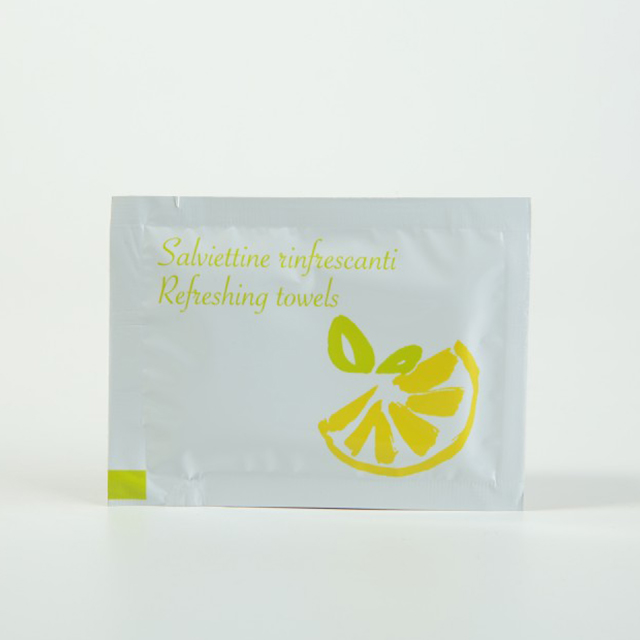
Not all culinary messes require the same chemical solution. Procurement managers must carefully match the liquid formulation to their specific menu items to ensure operational efficiency.
Menus featuring heavy animal fats and sticky sugar-based sauces demand robust cleaning. Standard water-based formulas will just smear grease across the skin. For these demanding environments, custom branded hand cleaning restaurant wet wipes formulated with specialized surfactants are required. These agents break down lipid bonds efficiently. Incorporating natural citrus extracts like d-limonene provides effective grease-cutting properties while neutralizing strong lingering odors like garlic or crab.
Conversely, high-end dining requires a different approach. Heavy degreasers feel off-putting in a refined setting. Fine dining venues should specify formulas focused on gentle refreshment. A base of Reverse Osmosis purified water combined with a subtle botanical scent adds a sophisticated touch. Options like white tea or cucumber cleanse the tactile senses without interfering with the delicate tasting notes of a post-dinner wine.
The physical substrate directly determines durability, liquid retention, and ultimate guest comfort. Selecting the right non-woven fabric is a vital engineering step in the procurement process.
The foundation of a high-quality product is its fabric weight, measured in Grams per Square Meter. Most standard restaurant wipes use a 40gsm to 60gsm spunlace non-woven fabric. A higher number indicates a thicker, more luxurious cloth. Cross-laid spunlace offers superior tensile strength compared to parallel-laid options. This specific manufacturing technique prevents the wipe from tearing during vigorous use.
Guest demographics vary widely. Many individuals have highly sensitive skin. Specifying custom skin friendly restaurant wet wipes is critical to prevent allergic reactions. Premium manufacturers infuse the fabric with dermatologist-approved ingredients like Aloe Vera and Vitamin E. These additives maintain a skin-friendly pH balance between 5.5 and 6.5, restoring moisture and significantly elevating the perceived quality of the amenity.
Transitioning to a fully customized branding program requires systematic planning. Follow these practical engineering and design steps to ensure the final product aligns perfectly with your corporate identity.
Start by selecting the physical dimensions. Standard sizes include compact square formats or elongated rectangular configurations. Rectangular packets offer a larger printable surface area for complex logos. For color accuracy, rely on the Pantone Matching System. This strict color matching ensures your wrapper aligns perfectly with your menus, exterior signage, and staff uniforms.
Clear commercial printing requires high-resolution vector files like Adobe Illustrator formats. Avoid standard JPEG images which pixelate during the flexographic printing process. Keep the front design clean by centering your primary logo with high contrast. Utilize the back of the packet for practical information, ingredient lists, or a scannable QR code. Always insist on a physical pre-production sample for large enterprise orders to verify seal integrity and color accuracy before mass production.
Purchasing custom-branded amenities is a strategic investment. Understanding the financial mechanics helps procurement officers budget effectively. Recent supply chain stabilizations have made custom printing highly accessible to independent restaurants.
The unit economics of custom manufacturing follow standard industrial principles. Cost per unit decreases significantly as order volume increases. The process involves one-time setup costs for creating custom copper printing cylinders. Because these setup fees are fixed, ordering in larger volumes drastically reduces the overall cost.
Order Volume Tier | Estimated Cost Per Unit | Best Suited For | Setup Fee Status |
|---|---|---|---|
10,000 - 20,000 Units | Highest | Special events, pop-ups, single-location independents | Standard Plate Fee Applies |
30,000 - 50,000 Units | Moderate | Small restaurant groups and regional chains | Often Discounted |
100,000+ Units | Lowest | Large franchises and national hospitality brands | Typically Waived on Reorders |
A common concern regarding bulk orders is inventory spoilage. Properly sealed individual packets boast a shelf life of 12 to 24 months. To maximize longevity, store inventory in a cool, dry, climate-controlled environment. Extreme warehouse heat can degrade the adhesive seals and evaporate the internal liquid formula.
While any foodservice business benefits from branded hygiene products, certain culinary niches find them absolutely indispensable for maintaining basic operational success.
Eating crab legs and peel-and-eat shrimp is a tactile, messy experience. Guests are submerged in garlic butter and heavy spice rubs. Dry napkins simply tear and stick to wet hands. Heavy-duty, citrus-infused wet wipes are a non-negotiable amenity here, helping guests clean up thoroughly before touching their smartphones.
Thick barbecue sauces and sticky buffalo glazes adhere stubbornly to the skin. Customers expect to get messy, but they also expect a reliable way to clean up. Offering a durable, high-GSM wet wipe demonstrates that the restaurant understands the realities of its menu.
In luxury hospitality, the wet wipe transforms from a basic utility into a ceremonial part of the service. High-end steakhouses often utilize ultra-premium, skin-friendly materials presented warm on a dedicated tray. This minimalist branding reinforces high dining room standards.
Custom wipes represent a vital piece of the customer service puzzle. They offer a brilliant, highly visible branding opportunity. By thoughtfully addressing the physical comfort of your guests at the conclusion of their meal, you solidify a positive lasting impression that drives loyalty.
Whether your operation requires heavy-duty degreasing cleaners for a bustling wing joint or gentle options for a luxury bistro, selecting the right manufacturing partner is crucial. Take the next step in refining your hospitality standards. Visit ZJ Wipes to browse product catalogs, request a free quote, or order a sample pack to test the premium formulas yourself before committing to a bulk order.
Yes. Many commercial suppliers now offer highly sustainable alternatives. Biodegradable wipes made from bamboo fibers or natural cotton are readily available. Restaurants can also select recyclable wrapper options to align with corporate environmental goals.
Most manufacturers standardly allow double-sided printing. Industry best practices recommend placing your primary logo on the front face for immediate brand recognition. Reserve the back space for practical contact information or scannable QR codes.
Average production timelines typically range from two to four weeks. This duration accounts for digital proofing, physical printing of the wrappers, liquid formulation, and final mechanical assembly. Shipping times vary based on freight methods.
Yes, they absolutely can. Skin-friendly wet wipes that exclude alcohol utilize specialized surfactants to break down oils. Natural additives like citrus extracts effectively cut through heavy grease without causing dermal dehydration.
The standard exterior packet size usually ranges from 50x50mm for square wrappers to 60x100mm for rectangular ones. The internal unfolded wipe typically measures around 150x200mm or 180x200mm, providing ample surface area for thorough hand cleaning.
Pricing depends heavily on order volume, fabric weight, and printing complexity. For small initial runs, prices might range from $0.05 to $0.10 per unit. For large enterprise orders exceeding 100,000 units, the cost drops significantly, often falling between $0.02 and $0.04 per packet, making it a highly cost-effective marketing tool.


