
English 
Landline:
+86-571-8233-3525
Telephone:
Telephone:
+86-150-6710-5089
+86-138-6743-1140
Address:
Building 41 workshop, No.17, Xueyuan road, Jiyang street, Zhuji city, Zhejiang Province, China


Views: 0 Author: Site Editor Publish Time: 2026-09-30 Origin: Site


Have you ever served a platter of sticky, slow-smoked BBQ ribs or a buttery seafood boil to your guests, only to watch them struggle with the cleanup? Dry paper napkins simply smear the greasy mess around. They leave diners frustrated and their hands coated in a slick film. For modern hospitality operators, maintaining impeccable hygiene standards without inflating operational costs is a constant balancing act. In this comprehensive breakdown, we will evaluate the functional differences between traditional tabletop linens and specialized moistened towelettes. By understanding the distinct advantages of each, you will discover how strategic purchasing decisions fundamentally elevate the guest journey.
Purpose-Driven Cleaning: Traditional cloth and paper linens are optimized for lap protection and moisture absorption. Conversely, specialized wet wipes are formulated with mild surfactants essential for breaking down heavy grease, sticky sauces, and stubborn food residues on human skin.
Elevated Experience: Providing a temperature-controlled, scented towelette transforms a standard meal into a memorable, premium hospitality event that guests deeply appreciate.
Takeout Essential: For off-premise dining, sealed individual packets are a non-negotiable operational asset. They guarantee that delivery and food truck customers can maintain proper hygiene on the go, without relying on nearby restroom facilities.
The Best Strategy is Hybrid: Data-driven hospitality managers do not view this as a strict either-or choice. The most successful establishments strategically pair traditional table linens with high-quality wet wipes to comprehensively address all dining scenarios.
Recent market data indicates a significant pivot in restaurant supply procurement. As experiential dining formats like hands-on seafood boils, global street foods, and gourmet burger joints surge in popularity, traditional dry cellulose products are failing to meet basic degreasing demands. Industry analysts note that post-pandemic consumers expect proactive sanitization integrated directly into the tabletop experience. Consequently, hospitality managers are moving away from high-volume paper waste. They are instead adopting purpose-built wet wipes engineered with spunlace non-woven technology and RO pure water to tackle heavy oils effectively.
The standards of dining hygiene have undergone significant transformations over the centuries. Historically, cloth linens and paper products dominated the tabletop landscape. Cloth napkins originated as a symbol of formal dining. They were primarily designed to drape across the lap to protect expensive clothing from accidental spills. Later, paper alternatives emerged as a cost-effective, disposable option for fast-casual environments, serving the basic function of dabbing the mouth and drying hands.
To clarify the contenders in this operational comparison, we must define their core mechanics. Dry napkins, encompassing both standard paper dispensers and laundered linens, rely entirely on physical absorption. Furthermore, they lack the chemical ability to break down lipids. On the other hand, pre-moistened towelettes are engineered specifically for skin contact. High-quality variants utilize a cross-laid spunlace non-woven fabric. This material matrix holds a measured liquid solution designed to actively dissolve food messes, neutralize odors, and sanitize hands without requiring a disruptive trip to the washroom.
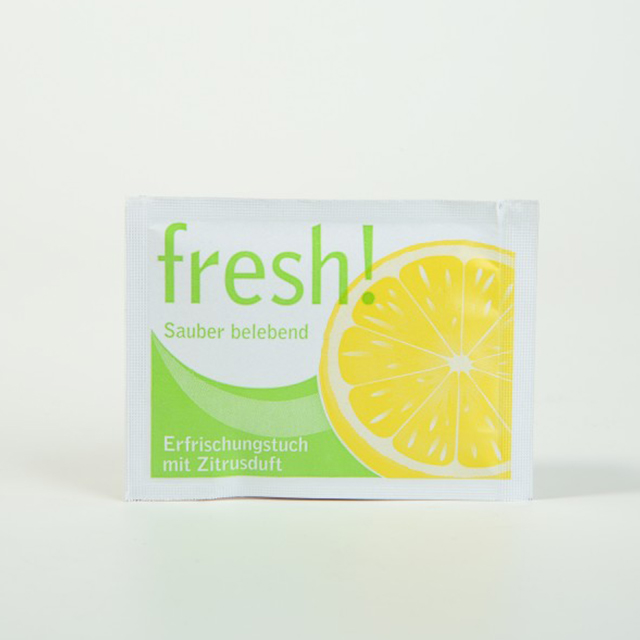
Understanding the precise dining scenarios where dry paper underperforms is critical for restaurant operators aiming to optimize their supply purchasing. Towelettes excel in situations requiring active grease breakdown and immediate sanitization.
Certain menu items fundamentally require moisture and mild cleansing agents for effective cleanup. Imagine a guest cracking open a buttery crab leg or biting into a loaded gourmet taco. The resulting residue cannot be simply wiped away with dry cellulose. When a customer uses standard paper on animal fat, the material absorbs a fraction of the oil but leaves a slick, uncomfortable film on the skin. This inevitably leads to diners using excessive amounts of paper in a futile attempt to feel clean.
Integrating hand cleaning restaurant wet wipes provides a distinct chemical advantage. These specific products are often formulated with RO EDI pure water and gentle, food-grade surfactants infused within a durable 50gsm spunlace fabric. The moisture actively cuts through the grease, lifting the residue away from the skin efficiently. This targeted cleaning prevents diners from transferring oils to delicate glassware, polished silverware, or expensive personal smartphones.
Consumer behavior has shifted notably towards proactive personal health. Diners increasingly expect the ability to sanitize their hands immediately before consuming food. This is especially true in bustling environments where navigating to a public restroom is inconvenient. Offering a sanitizing wipe the moment guests are seated addresses this demand directly. It offers immediate peace of mind, demonstrating that the establishment prioritizes guest safety.
Beyond visual cleanliness, olfactory hygiene is a crucial component of overall guest comfort. Foods heavy in garlic, onions, exotic spices, or seafood leave lingering odors on the skin long after the meal concludes. Because dry napkins possess zero capacity to neutralize these smells, guests are often left feeling self-conscious. A quick wipe-down with refreshing restaurant wet wipes effectively neutralizes strong food odors. These are frequently formulated with natural deodorizers like lemon extract or aloe vera, allowing patrons to leave the establishment feeling completely revitalized.
While hygiene serves as the functional baseline, moistened cloths also act as a powerful tool for enhancing the perceived value of the dining experience. In a fiercely competitive hospitality market, small tactile details often drive long-term customer loyalty.
The application of temperature-controlled towelettes is a hallmark of premium hospitality. This practice is frequently observed in high-end sushi bars, luxury steakhouses, and international first-class cabins. Offering warm, subtly scented cloths during the freezing winter months provides a soothing, luxurious introduction to a meal. Conversely, presenting chilled, lemon-scented wipes during the peak of summer offers immediate relief from the heat.
These sensory touchpoints signal to the customer that the management team is deeply invested in their personal comfort. It elevates the mundane act of washing hands into an anticipated, spa-like ritual. Experiencing this level of meticulous care increases the overall perceived value of the meal, frequently justifying higher menu price points.
The final moments of a dining experience disproportionately impact a customer's lasting memory and subsequent online reviews. If a patron finishes a phenomenal culinary creation but leaves feeling sticky and uncomfortable, that physical discomfort will overshadow the chef's hard work. Delivering a high-quality, durable wipe alongside the final bill ensures the guest's last physical interaction with your brand is positive and cleansing.
To make an informed purchasing decision, operators must acknowledge that towelettes are not a wholesale replacement for traditional linens. Paper and cloth possess distinct functional advantages that remain absolutely indispensable in a standard dining room setting.
Linen napkins remain unmatched in their capacity for lap protection. Their generous size, substantial weight, and natural friction allow them to drape securely over a diner's clothing. This provides a necessary barrier against dropped food and spilled wine. A small wet wipe simply cannot fulfill this structural role. In addition, cloth napkins are foundational to the visual aesthetics of table-scaping.
Dry materials are structurally necessary for moisture management during an active meal. Diners frequently need to pat their mouths after taking a sip of a beverage or a small bite of food. Using a pre-moistened cloth for this brief action is inefficient and might leave a lingering, unwanted taste on the lips. Additionally, after a guest rigorously cleans their hands with a wet wipe, they occasionally require a dry paper or cloth napkin to pat their skin completely dry. In this context, the two products work in a perfect symbiotic relationship.
The off-premise dining market has expanded exponentially. This dramatic shift requires a complete reevaluation of how hygiene products are packaged and distributed to remote consumers.
When customers order takeout, they are frequently consuming their meals in environments completely lacking access to running water and soap. Eating a messy barbecue sandwich at an office desk or inside a parked car turns into a logistical nightmare if the restaurant only provided dry paper. Tossing a handful of standard napkins into a delivery bag is a common practice, but it is fundamentally inadequate for grease-heavy items.
Providing individual packet restaurant wet wipes elegantly bridges this gap. Featuring sealed PET and PE composite film packaging, these units guarantee moisture retention for extended periods. They ensure that the end-user possesses a reliable, effective method to sanitize their hands regardless of their physical location.
From an operational standpoint, individual packets offer vastly superior inventory control. Restaurant staff are notorious for grabbing unmeasured, massive fistfuls of dry paper napkins to stuff into delivery bags. This leads to staggering inventory waste and inflated supply costs. Single-use packets allow management to enforce strict portion control, instructing staff to include exactly one or two units per entrée.
Financial viability remains the ultimate deciding factor for hospitality procurement. Integrating a new consumable product requires a crystal-clear understanding of cost-efficiency and long-term environmental impact.
Evaluating the true cost of dining hygiene requires looking far beyond the initial invoice. Cloth linens carry substantial hidden operational burdens, including expensive weekly commercial laundering contracts, energy consumption, and high replacement rates due to permanent wine staining. Paper napkins appear incredibly cheap upfront, but their lack of cleaning efficacy leads to astronomical volume usage.
Conversely, procuring high-quality restaurant wet wipes in bulk offers a stabilized, highly predictable cost per user. Because one durable moistened cloth accomplishes the degreasing power of several dry napkins, the overall consumption volume drops dramatically.
Hygiene Tool | Primary Function | Grease Removal Efficacy | Hidden Operational Costs | Usage Volume per Messy Meal |
|---|---|---|---|---|
Cloth Napkins | Lap protection, aesthetics | Low | High | 1 per guest |
Paper Napkins | Drying, minor mouth dabbing | Low | Moderate | 5-10 per guest |
Wet Wipes | Hand sanitization, degreasing | High | Low | 1-2 per guest |
A frequent hesitation regarding single-use products is their environmental footprint. Historically, wipes were manufactured using synthetic plastics that contributed heavily to landfill waste. Fortunately, the manufacturing sector has innovated rapidly in response to global sustainability demands. Modern towelettes are increasingly fabricated from fully biodegradable materials, such as bamboo pulp or flushable plant-based cellulose fibers. By selecting eco-friendly suppliers, owners can provide premium hygiene solutions without compromising their corporate sustainability goals.
Extensive operational analysis indicates that the most effective hygiene strategy in the hospitality industry is not a matter of choosing one singular product over the other. Instead, the smartest move is implementing a strategic hybrid approach that leverages the unique strengths of both mediums.
For maximum guest satisfaction and operational efficiency, restaurants should deploy specific tools for specific phases of the meal. A standard best practice is to provide a folded linen or high-quality paper napkin at the very beginning of the meal to serve as lap protection. Then, concurrently with the delivery of finger-heavy entrees, the staff should deliver the specialized wet wipe. This two-pronged approach ensures all functional needs are met seamlessly.
Adopting this hybrid model opens unique, highly visible avenues for brand reinforcement. The outer wrappers of individual packets serve as miniature blank canvases. Custom-printing your restaurant logo, brand colors, or social media handles transforms a simple hygiene product into a tangible marketing asset. When a customer takes an unused, beautifully branded wipe home, it acts as a persistent, low-cost reminder of their excellent meal.
Upgrading your tabletop cleaning tools is a low-cost, high-impact strategy that boosts customer satisfaction immensely. If you are ready to elevate your hospitality standards with premium, customizable degreasing solutions, explore the comprehensive catalog at ZJ Wipes to find the exact specifications tailored to your menu.
Yes, the vast majority of high-quality wipes designed for restaurant use are formulated specifically with skin safety in mind. Manufacturers typically utilize gentle, non-irritating ingredients, frequently incorporating soothing additives like aloe vera, chamomile extract, and Vitamin E. This makes them perfectly safe for wiping sauces or grease from around the mouth and lower face after a meal. However, diners should be advised to avoid direct contact with the eyes to prevent temporary irritation.
Yes, they do possess an expiration date, which generally ranges between one to two years from the date of manufacture. The primary concern is not that the cleaning ingredients become harmful over time, but rather that the internal moisture may slowly evaporate, leaving the cloth dry and ineffective. To maximize their shelf life, restaurant operators should store bulk inventory in a cool, dry environment, far away from direct sunlight or extreme heat sources.
While these moistened cloths are incredibly effective at breaking down sticky residues, removing visible dirt, and neutralizing strong food odors right at the dining table, they are not a complete medical substitute for traditional hand washing. For general dining comfort and immediate grease removal, they perform exceptionally well. However, for true sanitization, thorough hand washing with antibacterial soap and warm water remains the gold standard for personal hygiene.
The most financially prudent strategy for acquiring these tabletop products is to purchase them in bulk directly from a dedicated manufacturer or a specialized wholesale supplier. Bypassing retail middlemen significantly reduces the overall cost per unit. Additionally, purchasing in large volumes often unlocks the ability to customize the outer packaging with your specific branding at a minimal extra cost.
Selecting the correct material depends entirely on your menu. For light dining and cafes, a standard 40gsm spunlace non-woven fabric is highly cost-effective. However, if your establishment serves heavy BBQ, seafood boils, or greasy street foods, upgrading to a 50gsm to 60gsm cross-laid fabric provides the necessary tensile strength and liquid retention to scrub away stubborn oils without tearing in the guest's hands.
Absolutely. If you plan to stock wipes in your commercial washrooms, it is critical to specify flushable variants made from fully plant-based cellulose. These specialized materials are engineered to disperse rapidly in municipal water systems, preventing costly plumbing blockages that standard synthetic wipes would inevitably cause.


