
English 
Landline:
+86-571-8233-3525
Telephone:
Telephone:
+86-150-6710-5089
+86-138-6743-1140
Address:
Building 41 workshop, No.17, Xueyuan road, Jiyang street, Zhuji city, Zhejiang Province, China


Views: 0 Author: Site Editor Publish Time: 2026-07-03 Origin: Site


The tactile elements of a dining experience directly influence guest perception and brand retention. Post-meal hygiene amenities, particularly the quality of a disposable wipe provided at the end of a messy meal, leave a lasting impression on patrons. Foodservice operators must balance unit economics, custom branding minimums, and strict hygiene compliance when procuring disposable wipes for both front-of-house (FOH) and back-of-house (BOH) applications. Selecting the wrong chemical formulation for a dining table can degrade the finish, while providing harsh sanitizers to guests can cause skin irritation. This guide provides a technical evaluation framework for selecting the right commercial suppliers. We analyze packaging substrates, chemical formulations, and inventory management realities to help you optimize your procurement strategy and maintain high operational standards across your entire facility.
Application Dictates Formulation: Guest-facing refreshment wipes require skin-safe, cosmetic-grade formulations, whereas BOH and table-turnover wipes require EPA-registered sanitizing agents.
Packaging Impacts Shelf Life: Individually wrapped packets are mandatory for guest distribution, but improper storage leads to premature drying and inventory loss.
Branding vs. MOQ Trade-offs: Custom-printed wrappers elevate brand equity but require higher Minimum Order Quantities (MOQs) and longer lead times compared to generic bulk options.
Material Substrate Matters: The physical durability of the wet wipe dictates its effectiveness on nonporous commercial surfaces versus delicate hands.
Procuring the right wiping products requires a clear understanding of their intended use within your specific operational workflow. You must delineate the primary use case before evaluating suppliers. A sticky finger cleanup for a high-volume seafood joint demands a completely different product architecture than a rapid table sanitization wipe used by bussers during peak dinner rushes. For heavy grease applications, the wipe needs a specific surfactant load to break down animal fats without requiring the guest to scrub their hands aggressively. Conversely, a table wipe needs high liquid retention to cover a four-top table evenly without drying out halfway through the process.
The physical presentation of restaurant wet wipes signals facility cleanliness and professional standards to the consumer. Guests equate the quality of the table amenities with the cleanliness of the kitchen. A premium, heavy-duty wipe implies a premium dining standard. When a guest tears open a packet and pulls out a thick, textured cloth that unfolds easily, it reinforces the value of the meal. If they pull out a thin, translucent piece of material that tears immediately, it creates a negative association right at the end of the dining experience.
Regulatory compliance forms the baseline of any procurement decision. You must establish requirements for FDA compliance when dealing with skin contact. Products meant for human skin fall under cosmetic regulations, requiring specific labeling and ingredient safety profiles. EPA compliance is mandatory for surface disinfection. Mixing these two categories creates significant liability and operational risk. Handing a guest an EPA-registered surface wipe can lead to contact dermatitis, while using an FDA-cosmetic wipe on a raw chicken prep station will fail to neutralize dangerous pathogens.
Guest-facing products must feature cosmetic-grade formulations designed strictly for skin safety. These products prioritize user comfort, scent, and grease removal without causing dermatological issues. The liquid solution typically consists of purified water, mild surfactants, skin conditioners like aloe vera or glycerin, and a fragrance. The goal is to dissolve food residue quickly while leaving the hands feeling soft and clean, rather than sticky or chemically treated.
Evaluating Lemon Restaurant Wet Wipes reveals why they remain the industry standard for citrus-scented degreasing. The formulation strikes a precise balance between scent longevity and chemical astringency. The natural citrus oils, often containing d-limonene, act as excellent natural degreasers. They cut through rib sauce, fried chicken grease, or seafood butter efficiently. The moisture level remains high enough to clean hands thoroughly, and the citrus scent neutralizes lingering food odors on the skin.
Regional demand is growing for "restaurant cold wipes." These are high-GSM (Grams per Square Meter), pre-meal refreshers used predominantly in high-end or hot-climate dining establishments. They are often stored in dedicated refrigeration units and served on small trays, mimicking the traditional hot towel service but optimized for summer months. The thermal shock of a cold towel provides an immediate refreshing sensation for guests walking in from high temperatures.
Formulations vary widely based on the target demographic. Alcohol-based options evaporate quickly, leaving hands dry in seconds, but high alcohol content can strip natural oils from the skin. Aloe and water-based formulations cater better to sensitive skin, offering a soothing effect after eating spicy or messy foods. Some establishments opt for completely unscented, hypoallergenic wipes to accommodate guests with severe fragrance sensitivities.
Commercial kitchen grade sanitization requires aggressive chemical profiles. Broad-spectrum efficacy is non-negotiable. Active ingredients must target common foodborne pathogens like E. coli, Listeria, and Salmonella, alongside highly contagious non-enveloped viruses like Norovirus, which frequently threaten dining area surfaces. The chemical payload in these wipes is specifically calibrated to destroy cell walls or denature proteins in these microorganisms.
Multi-surface compatibility dictates how chemical formulations interact with nonporous materials. Dining environments feature laminate tables, vinyl booths, sealed wood, acrylic panels, and stainless steel. The wrong chemical will cause surface degradation. For example, repeated use of high-concentration bleach wipes can cause stainless steel to pit and rust over time. Certain alcohol-based wipes can strip the clear coat finish off wooden tables or leave a sticky, cloudy residue on acrylic sneeze guards.
Dwell time—the amount of time a surface must remain visibly wet for the disinfectant to work—is a critical metric. High-turnover environments require wipes with short dwell times, often one minute or less, for nonporous surfaces like tables, chairs, and prep stations. If a busser wipes a table and dries it immediately with a rag, they interrupt the dwell time, rendering the sanitization process incomplete. Therefore, selecting a wipe with a rapid kill claim is essential for fast-paced operations.
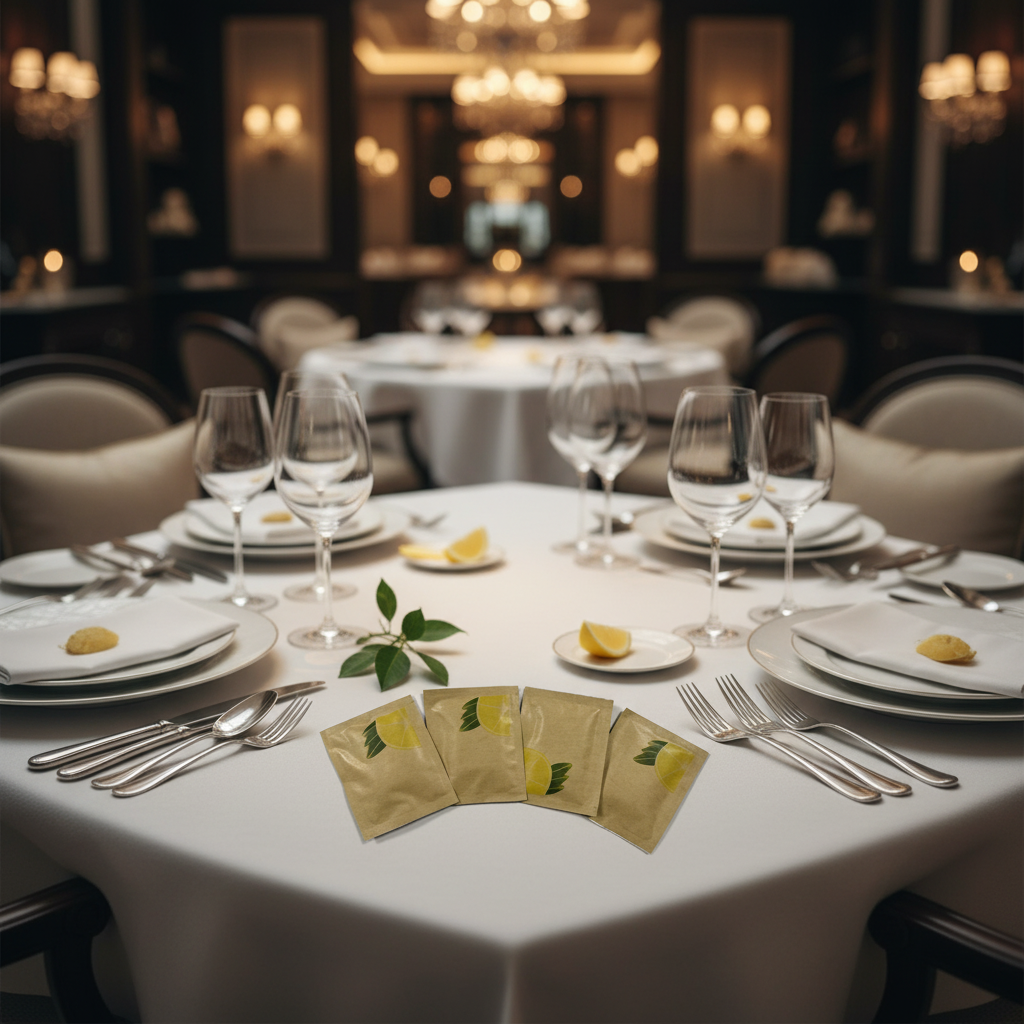
Custom logo printing on individual wrappers builds brand equity in cafes and restaurants. Patrons often take extra packets home, keeping them in cars or bags, which extends brand visibility far beyond the dining room. A well-designed wrapper acts as a miniature billboard. However, custom manufacturing involves longer lead times, specific design approvals, and plate setup fees compared to off-the-shelf generic procurement.
Generic bulk options provide immediate availability and lower unit costs. For high-volume operations where the wipe is used purely for utility rather than presentation, unbranded packets make financial sense. The decision hinges on whether the establishment views the wipe as a marketing asset or a strict operational expense.
Wipe Category | Primary Application | Regulatory Standard | Key Formulation Trait | Typical GSM Range |
|---|---|---|---|---|
Guest Refreshment | Hand/Face cleaning post-meal | FDA (Cosmetic) | Aloe, Citrus, Skin-safe | 35 - 50 GSM |
Surface Sanitizing | Table turnover, FOH cleaning | EPA Registered | Low dwell time, no-rinse | 45 - 60 GSM |
BOH Disinfecting | Prep stations, heavy spills | EPA Registered | Broad-spectrum, Quats/Bleach | 60 - 80 GSM |
The exterior packaging dictates both shelf life and guest perception. Individually Wrapped Kraft-Packaged Cleaning Wipes utilize kraft paper composites that provide a tactile premium feel. This material choice signals a commitment to sustainability, differentiating the establishment from those using standard glossy plastic wrappers. The matte finish of kraft paper also absorbs ink differently, allowing for muted, sophisticated branding designs.
You must evaluate the tear-resistance, moisture barrier properties, and seal integrity of individual packets. A weak seal allows moisture to escape, rendering the product useless. The packaging film usually consists of multiple laminated layers, including a structural layer (like PET), a barrier layer (like aluminum foil or EVOH to keep moisture in), and a sealing layer (like PE). If the barrier layer is too thin, the liquid will slowly evaporate through the packaging over several months.
For BOH efficiency, bulk dispenser formats like buckets, center-pull boxes, or soft packs with rigid plastic lids prevent cross-contamination and speed up the cleaning process. A center-pull bucket allows a line cook to grab a single wipe with one hand without touching the rest of the roll, maintaining sanitary conditions during busy service.
Surface wipes generally rely on Quaternary ammonium compounds (Quats) or alcohol-based sanitizers. Quats offer excellent residual cleaning power and are generally less harsh on surfaces than bleach. However, you must evaluate residue considerations carefully. Determine whether the surface wipes require a secondary potable water rinse before food contact, as mandated by local health codes for certain chemical concentrations. If a prep table is wiped with a high-concentration Quat wipe, placing raw dough directly on that surface without a water rinse can result in chemical contamination of the food.
For guest-facing wipes, review the safety data sheets for fragrance allergens. Dermatological safety is paramount to prevent allergic reactions among patrons with sensitive skin. Look for formulations that avoid harsh parabens and utilize mild preservatives like phenoxyethanol. The pH level of the liquid should be balanced close to the natural pH of human skin (around 5.5) to prevent irritation.
The fabric itself determines performance. Non-woven fabric types include spunlace, meltblown, or needle-punched materials. Spunlace is standard for any wet wipe intended for guests due to its softness and cloth-like feel. It is created by entangling fibers using high-pressure water jets. Meltblown fabric excels in grease absorption and chemical resistance, making it ideal for heavy-duty BOH tasks.
GSM (Grams per Square Meter) metrics determine the thickness and moisture-retention capacity. Heavy-duty surface cleaning requires a high GSM (60+) to hold enough chemical to meet dwell time requirements across a large surface area. A thin wipe will dry out before the table is fully coated. Light hand refreshing can utilize a lower GSM (35-45), provided the fabric remains tear-resistant when pulled from the wrapper.
Analyzing price breaks at different pallet volumes is essential for managing unit costs. High-volume operations benefit significantly from ordering full pallets, reducing the per-unit shipping burden. Wipes are heavy due to their water content, making freight a major factor in the landed cost. Consolidating orders to maximize pallet space minimizes the freight cost per case.
Navigating supplier requirements for custom-printed packaging involves understanding Minimum Order Quantities (MOQs). Custom runs typically range from 10,000 to 50,000 units depending on the printing method. Flexographic printing requires physical plates for each color, necessitating higher MOQs to absorb the setup costs. Digital printing allows for lower MOQs but often comes with a higher per-unit cost. Smaller operations must weigh this volume against their storage capacity and usage rates to avoid inventory expiration.
Sustainability premiums exist in the current market. The cost delta between biodegradable bamboo or kraft options and traditional synthetic plastic options can be notable. Bamboo viscose fibers cost more to process than standard polyester/viscose blends. Operators must decide if their target demographic values sustainable packaging and biodegradable substrates enough to justify the increased unit cost. In many upscale or farm-to-table concepts, this premium aligns perfectly with the brand identity.
Inventory degradation is a harsh reality in restaurant environments. Ambient humidity, temperature fluctuations, and poor packaging seal integrity compromise these products over time. This leads to dry, unusable packets that frustrate guests and waste capital. A guest opening a dry packet experiences an immediate drop in perceived service quality.
The micro-climate storage issue frequently destroys inventory. Storing tightly packed individual wrappers in enclosed, unventilated, or high-heat storage zones—such as directly above ovens, near dishwashers, or in uninsulated outdoor sheds—accelerates chemical breakdown and moisture loss. The liquid inside the packet heats up, increases vapor pressure, escapes through microscopic seal imperfections, and ruins the entire batch. Heat can also cause the fragrance oils to degrade, resulting in an unpleasant, rancid smell when opened.
Implement strict storage protocols by designating a climate-controlled, well-ventilated area specifically for paper goods and wipes.
Keep all master cases elevated off the floor using dunnage racks to prevent moisture wicking from concrete floors.
Store cases away from direct heat sources, ensuring ambient temperatures remain between 50°F and 75°F.
Rotate stock using a strict First-In, First-Out (FIFO) method to ensure older inventory is consumed before the 12-to-24-month shelf life expires.
Staff training prevents dangerous misuse. Mitigate the risk of staff handing harsh BOH chemical disinfecting wipes to guests for hand-cleaning. Color-code your inventory or use vastly different packaging formats to eliminate confusion. For example, mandate that all BOH wipes come in large cylindrical buckets, while all FOH wipes are individually wrapped packets. This physical distinction makes accidental cross-use nearly impossible.
Request physical substrate samples from multiple suppliers to test GSM, liquid retention, and tear resistance in your actual dining environment.
Verify active ingredient safety data sheets (SDS) to ensure all BOH surface wipes meet your local health department regulations for food-contact surfaces.
Audit your current dry storage facilities to confirm they are climate-controlled and properly ventilated before committing to large bulk pallet orders.
Establish clear visual and physical distinctions between guest-facing inventory and surface-cleaning inventory to prevent staff cross-use.
A: When stored correctly in a climate-controlled, ventilated environment between 50°F and 75°F, they typically maintain moisture for 12 to 24 months. Exposure to high heat, direct sunlight, or extreme temperature fluctuations significantly reduces this shelf life by causing the liquid to evaporate through microscopic imperfections in the packaging seals.
A: Cold wipes are high-GSM, premium towels stored in dedicated refrigeration units prior to service. Unlike standard ambient packets kept at room temperature, they provide a cooling, refreshing experience. This makes them highly popular in hot climates, outdoor dining patios, and upscale seafood establishments.
A: Yes, provided they are manufactured with cosmetic-grade, FDA-compliant formulations. The citrus extracts and mild surfactants are designed to cut through food grease while remaining gentle on the skin. Always verify that your supplier uses hypoallergenic ingredients and avoids harsh chemical preservatives.
A: Surface sanitizing wipes contain EPA-registered chemicals like Quats or high-concentration alcohol designed to kill pathogens on nonporous surfaces. Guest refreshment wipes use FDA-compliant, cosmetic-grade ingredients meant solely for cleaning human skin safely without causing contact dermatitis or irritation.
A: Yes, but you must verify the chemical compatibility with your specific furniture finishes. Some harsh disinfectants can strip the varnish off wooden tables or leave a sticky, cloudy residue on vinyl booths. Always check the required dwell time and whether a potable water rinse is necessary.
A: It depends entirely on the specific chemical formulation and your local health codes. Many modern food-contact surface sanitizers are formulated as "no-rinse" if used at the correct parts-per-million concentration. Always consult the product's safety data sheet and label instructions before using them on prep tables.


